
Born in Rigaud, Quebec, in 1897, Regina Seiden was the daughter of Jewish immigrants from Eastern Europe. Her family had settled in Quebec after leaving Galicia, a region of the Austro-Hungarian Empire, to escape rising antisemitism and persecution. In 1905, Seiden moved with her family to Montreal, where she would spend most of her life and become connected to the city’s vibrant artistic community.
Seiden’s artistic talents were encouraged from a young age. While attending the Académie Marie-Rose, a French Catholic school in Montreal, her teachers recognized her abilities and supported her pursuit of art. She continued her studies at the Art Association of Montreal, where she trained under some of Canada’s most influential artists, including William Brymner, Edmond Dyonnet, and Maurice Cullen.
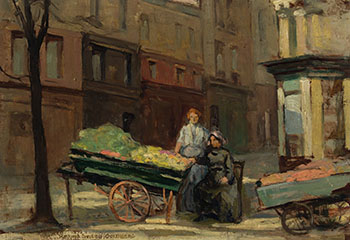
Vegetable Carts, Paris, oil on board by Regina Seiden
Brymner, who was an important mentor to many Canadian artists, encouraged his students to develop their own individual styles and supported the ambitions of women artists at a time when professional opportunities were limited. Through his classes, Seiden became connected with a group of young Montreal artists who would later form the Beaver Hall Group.
The Beaver Hall Group emerged in 1920 as an important artistic movement in Montreal. While the Group of Seven was gaining attention for its landscape paintings in Ontario, the Beaver Hall artists explored a broader range of subjects, including portraiture, interiors, and urban life. Seiden participated in the group’s first two exhibitions in 1921 and 1922 alongside artists such as A.Y. Jackson, Edwin Holgate, Lilias Torrance Newton, and Prudence Heward.
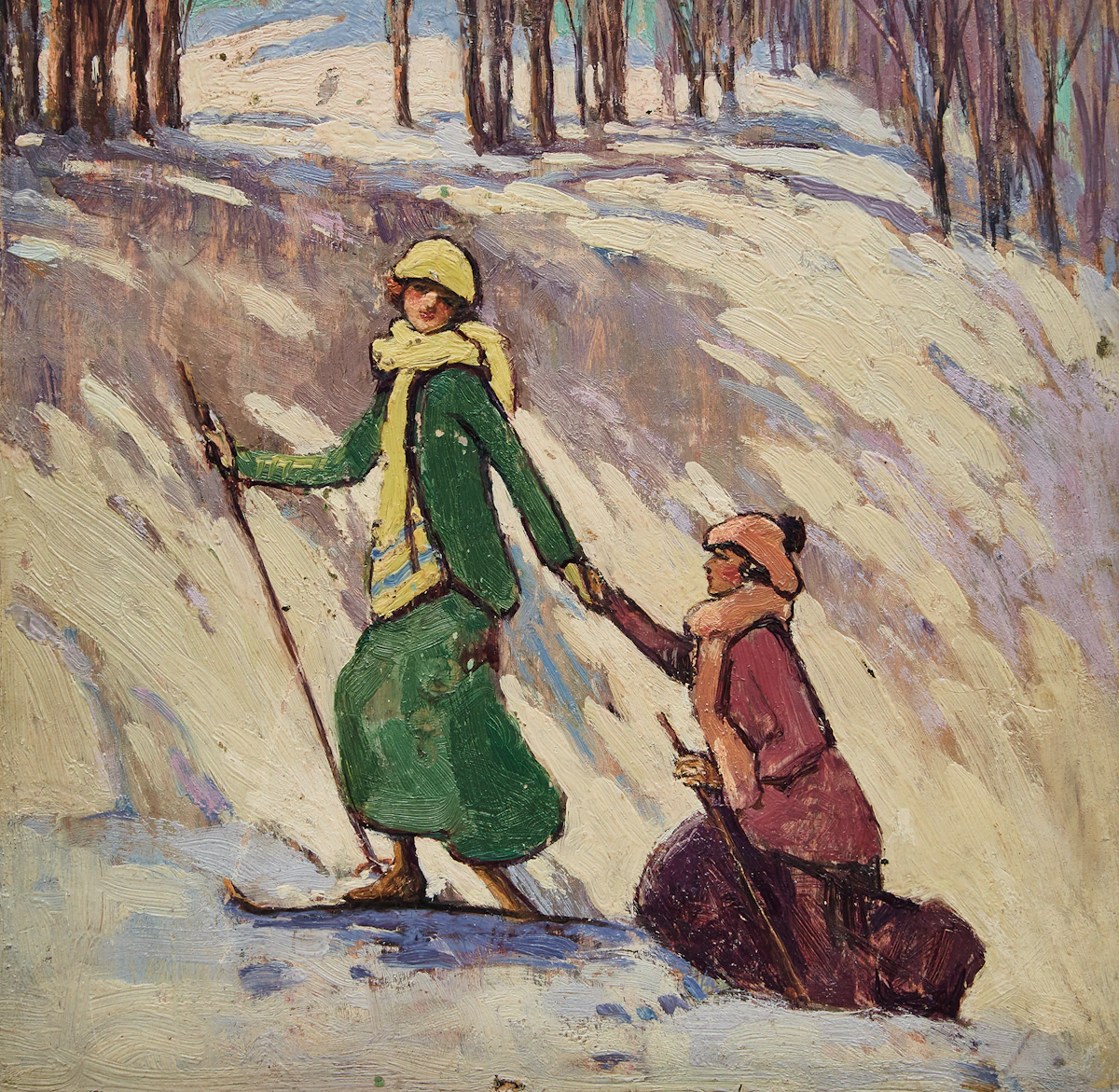
Skiers, circa 1920, oil on board by Regina Seiden
In 1921, Seiden travelled to Paris to continue her studies at the Académie Julian, one of the most respected art schools in France. Like many Canadian artists of her generation, she was drawn to Europe to study the traditions of European painting while developing her own artistic voice. During her time abroad, she travelled through Italy and painted scenes in Venice while continuing to refine her approach to colour, composition, and portraiture.
After returning to Montreal in 1922, Seiden entered the most productive period of her career. She established a studio on McGill College Avenue and created many of her best-known works, including Dora (1923). Her portraits often focused on women in everyday settings, revealing their personalities rather than presenting idealized figures.
Dora, 1923 by Regina Seiden
Unlike many traditional portraits that emphasized status or beauty, Seiden’s paintings captured subtle expressions, gestures, and moments of reflection. Her subjects, most of them women, including immigrants and members of Montreal’s diverse communities, are portrayed with individuality. Her work reflects an interest in the lives and experiences of women navigating the expectations placed upon them in the early twentieth century.
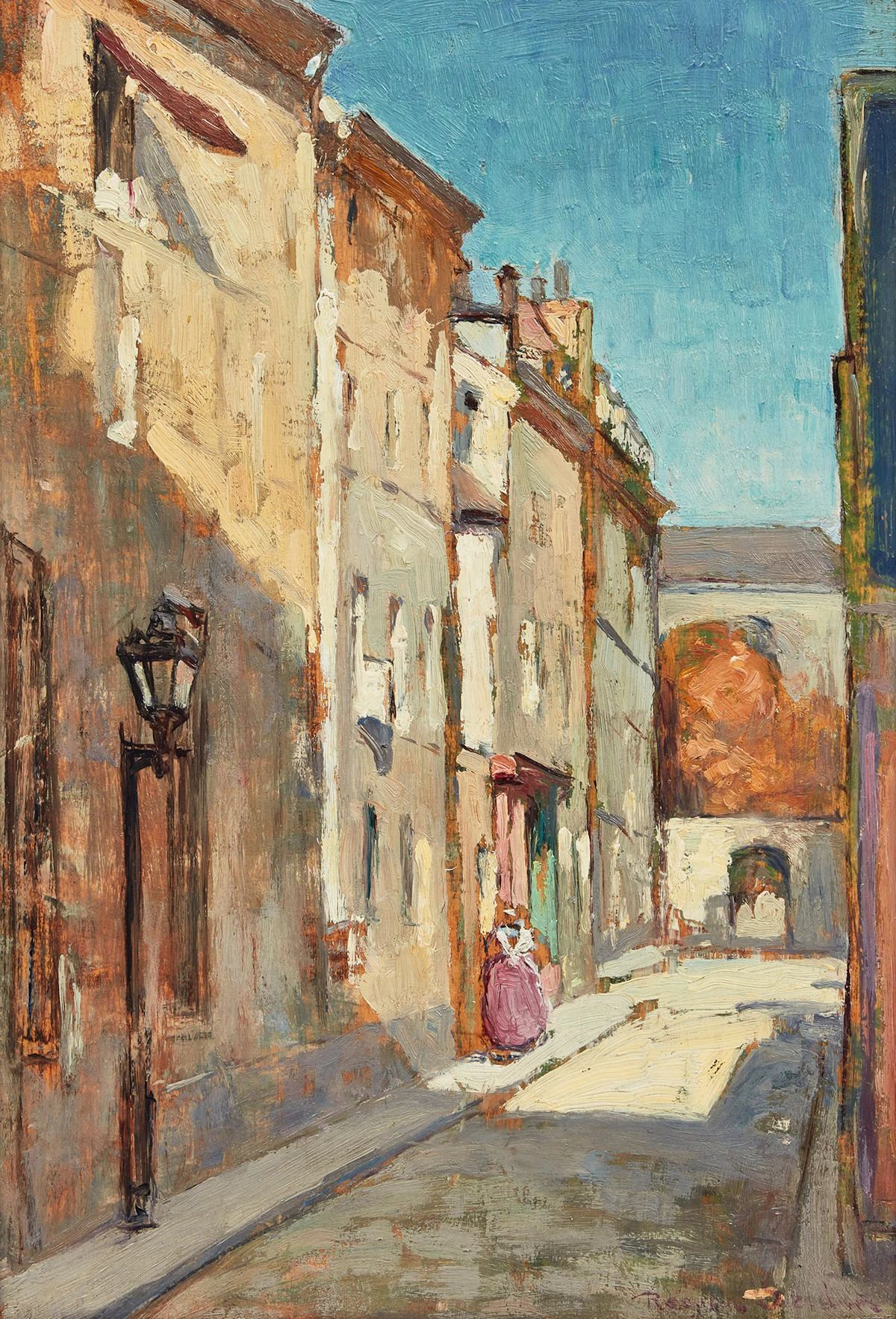
Rue St. Honoré, Paris, oil on board by Regina Seiden
Seiden received significant recognition during her early career. Her paintings were exhibited regularly at the Art Association of Montreal and the Royal Canadian Academy of Arts, and her work was included in international exhibitions such as the British Empire Exhibition in London in 1924 and the Exposition d’art canadien at the Musée du Jeu de Paume in Paris in 1927.
The National Gallery of Canada acquired several important works by Seiden, including portraits painted during this period. Her Portrait (1919), Dora (1923), and Nudes (1925) are now part of the institution’s collection, reflecting the importance of her contribution to Canadian portraiture.
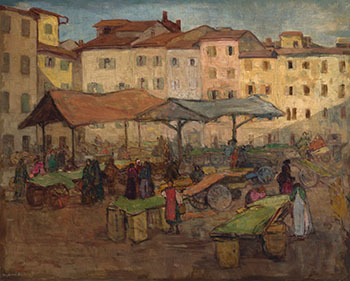
Marketplace, oil on board by Regina Seiden
In 1926, Seiden returned to Paris, where she met fellow artist Eric Goldberg. The two married in 1928 and spent time working together in Europe and Palestine. Shortly after their marriage, however, Seiden stepped away from her own artistic career. Her final major exhibition took place in 1930, after which she devoted herself to supporting Goldberg’s career and their shared artistic life.
For many years, Seiden remained connected to the Montreal art community. Together with Goldberg, she helped operate an art school at the Shaar Hashomayim synagogue in Westmount, where she taught and managed administrative responsibilities for two decades. She painted very little during this period.
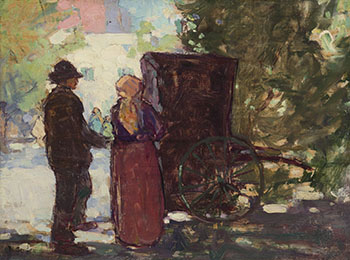
At the Market, oil on board by Regina Seiden
After Goldberg’s death in 1969, Seiden returned to painting, but she never fully regained the momentum of her early career. Her work was rediscovered in the 1970s and 1980s as scholars began re-examining the contributions of women artists who had been overlooked in Canadian art history.
Today, Regina Seiden is recognized as an important Montreal artist of the early twentieth century and a significant figure connected to the Beaver Hall Group. Her portraits offer a unique perspective on women’s experiences in Canada during a period of major social and artistic change. Through her thoughtful paintings of individuals and communities, Seiden created a body of work that remains quietly powerful nearly a century later.
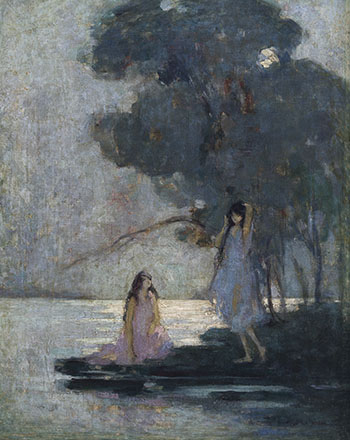
Nocturne, oil on canvas by Regina Seiden
Consignment at Rookleys
At Rookleys Canadian Art, we are actively seeking works by Regina Seiden for consignment, offering consignment rates far lower below what auction houses charge. If you have a piece by Regina Seiden to consign, please contact us at info@rookleys.com to discuss these opportunities further.
Works Cited
Canadian Women Artists History Initiative. “Regina Seiden Goldberg.” Concordia University.
Meadowcroft, Barbara. “How Many Artists Are There in the Family? The Career of Montreal Painter Regina Seiden (1897–1991).
National Gallery of Canada. “Regina Seiden Goldberg.” National Gallery of Canada.
The Canadian Encyclopedia. “Beaver Hall Group.” Historica Canada.
Walters, Evelyn. *The Beaver Hall Group and Its Legacy*. Toronto: Dundurn Press, 2017.