
Henrietta Shore (1880–1963) was a Canadian-born artist who became an important figure in the development of modern art on the American West Coast. Born in Toronto, she studied in Canada, New York and London before establishing her career in California. Her paintings evolved from traditional representation towards a more simplified, symbolic style that explored the forms found in nature.

Caribbean, c. 1925, oil on canvas by Henriette Shore
JLW Collection
Henrietta Mary Shore was born in Toronto on January 22, 1880. She studied with Canadian Impressionist Laura Muntz Lyall before travelling to New York around 1900, where she attended the Art Students League and studied under William Merritt Chase and Robert Henri. She also studied in London at the Heatherley School of Fine Art.
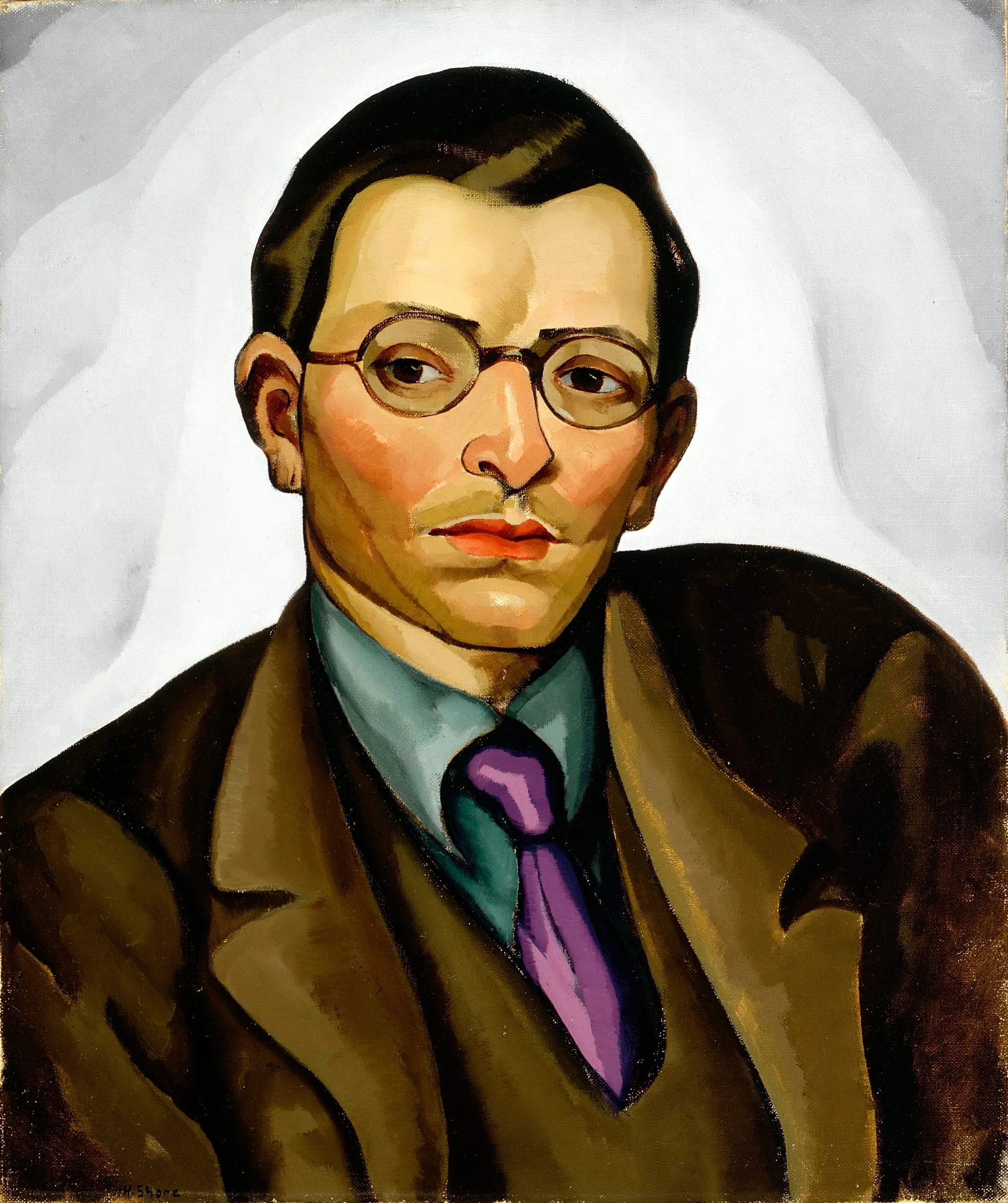
Jean Charlot, c 1927, oil on canvas by Henrietta Shore
Los Angeles County Museum of Art
Shore moved to Los Angeles in 1912 and became involved in the city's developing art community. She exhibited regularly and helped establish opportunities for artists working outside the traditional art establishment. In 1915, she received a silver medal at the Panama-California Exposition in San Diego, an important recognition early in her career.
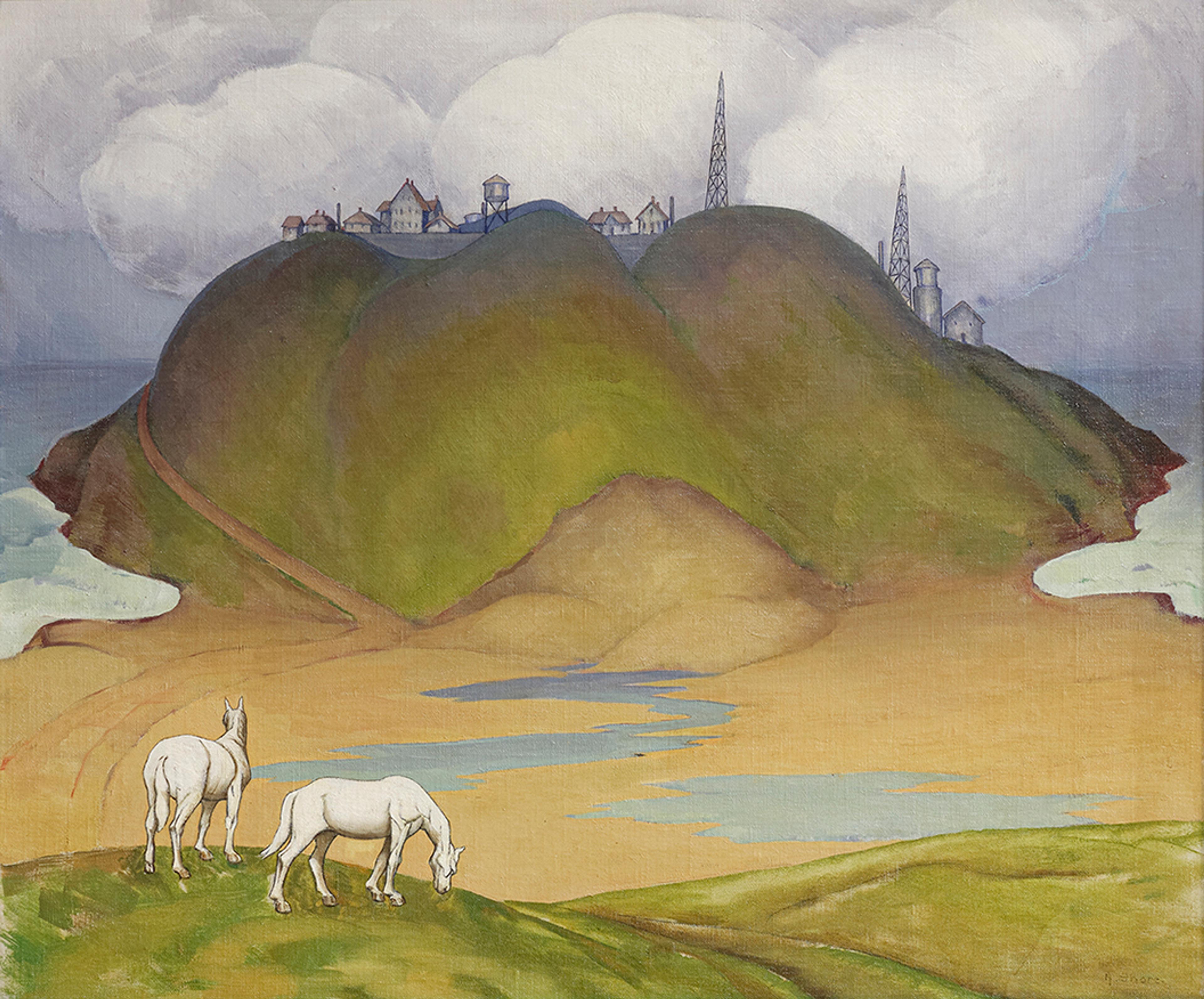
Point Sur Lighthouse, 1930, oil on canvas on board by Henrietta Shore
Art Bridges Foundation
After returning to New York in 1920, Shore began moving away from conventional representation. Her paintings became increasingly simplified and abstract, exploring the underlying shapes of flowers, shells and other natural forms. She often applied thin, transparent layers of paint, giving her compositions a distinctive luminosity.
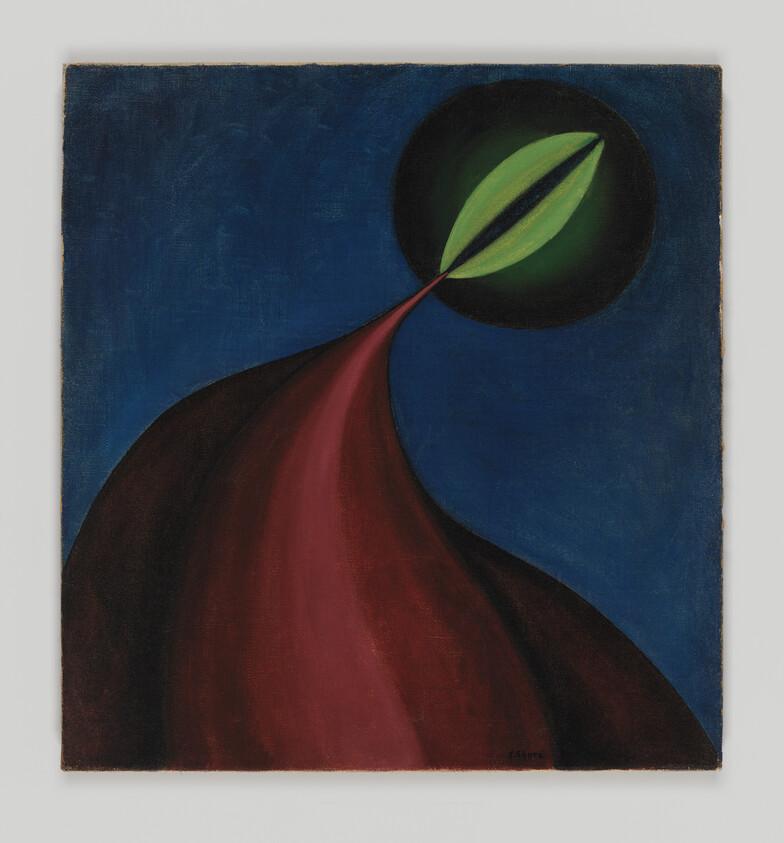
Trail of Life, c. 1923, oil on canvas by Henrietta Shore
Whitney Museum of American Art
This new direction received considerable attention. In 1923, her work was presented in mid-career retrospectives at New York's Ehrich Gallery and the Worcester Art Museum. The Whitney Museum of American Art describes these paintings as bold, simplified interpretations of organic forms, placing Shore among the artists exploring new directions in American modernism.
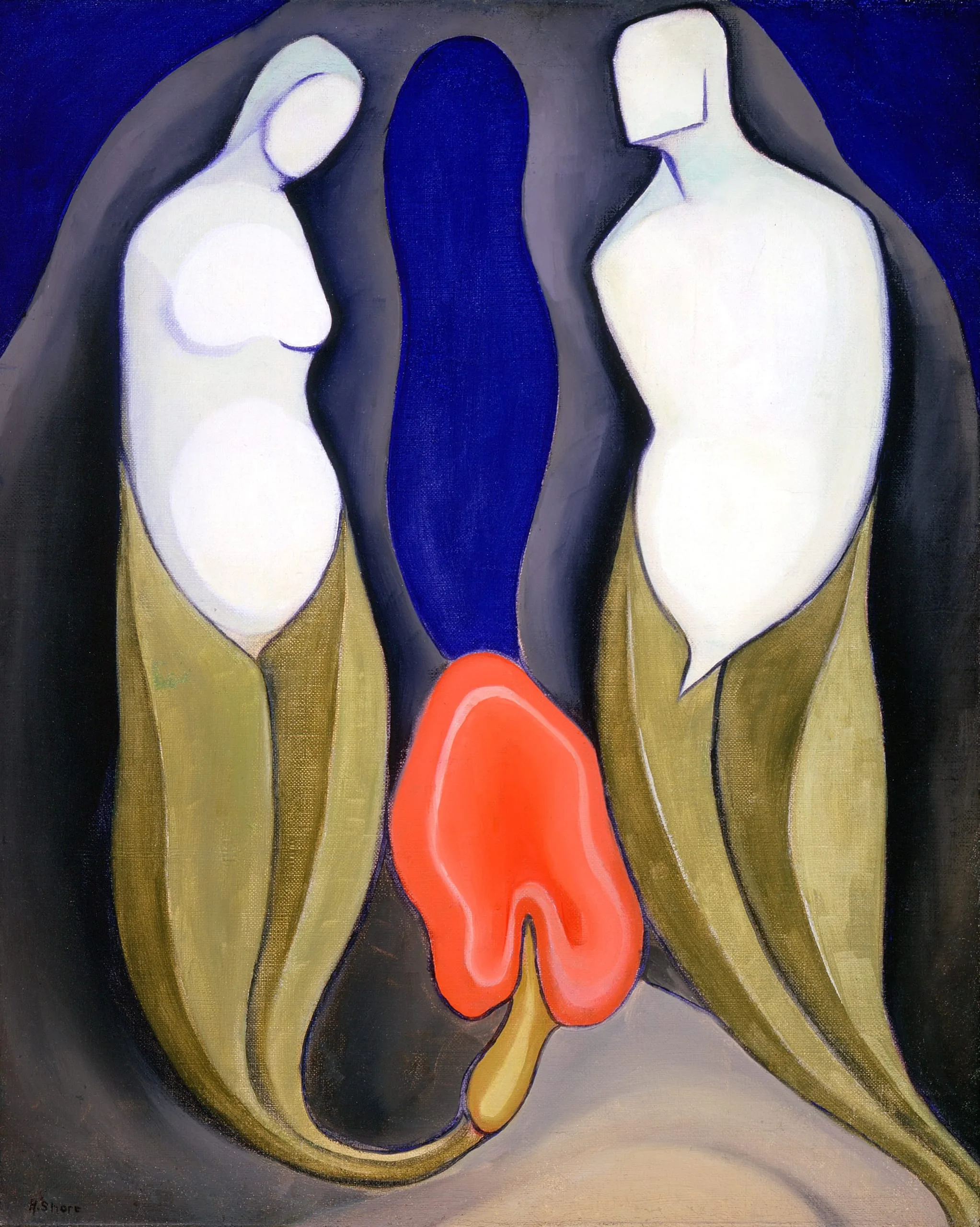
Life, c 1921, oil on canvas by Henrietta Shore
Los Angeles County Museum of Art
One of the most fascinating aspects of Shore's career was her relationship with photographer Edward Weston. The two shared an interest in the forms and structures of nature, particularly shells. In March 1927, Weston photographed shells in Shore's studio. He later wrote that her paintings had awakened his interest in the subject, making their relationship an important example of how painting and photography influenced one another during the development of modernism.
In 1930, Shore moved to Carmel, California, where Weston had settled the previous year. She increasingly focused on the surrounding landscape, particularly the rugged coastline of Point Lobos. Rather than depicting these scenes literally, she transformed rocks, plants and coastal formations into simplified shapes with symbolic and sometimes human-like qualities.
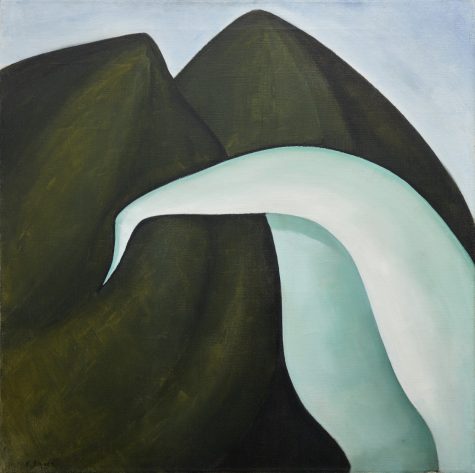
Waterfall, c. 1922, oil on canvas by Henrietta Shore
Dallas Museum of Art
During the Great Depression, Shore received commissions through government-supported art programs. In 1935, she was commissioned to create murals for the Santa Cruz Post Office, completing four paintings in 1936. The murals depict local industries, including artichoke farming, Brussels sprouts harvesting, fishing and limestone quarrying. Although the subjects were representational, Shore's expressive use of colour and form remained evident. The murals survive today as an important example of her public art.
Despite her earlier recognition, Shore became increasingly isolated during the 1930s. According to the Whitney Museum, mural commissions provided her only income during the decade, and she stopped painting entirely in 1937. She died in San Jose, California, on May 17, 1963, at the age of 83.

Irises, c 1930, oil on canvas by Henrietta Shore
Private Collection
For decades, Shore remained relatively unknown outside specialist art circles. Renewed interest began in 1986, when the Monterey Peninsula Museum of Art organized a retrospective of her work. The exhibition later travelled to the Laguna Art Museum, helping introduce her paintings to a new generation of viewers.
Her reputation has continued to grow through exhibitions examining American modernism and the contributions of women artists. In 2022, the Whitney Museum of American Art acquired Trail of Life, a painting dating to approximately 1923, and included it in the exhibition At the Dawn of a New Age: Early Twentieth-Century American Modernism.
 Mother and Child, c 1916, oil on canvas by Henrietta Shore
Private Collection
Today, Shore's work is represented in major public collections, including the Whitney Museum of American Art, the Los Angeles County Museum of Art and the National Gallery of Canada. Her career shows how a Toronto-born artist became an important force in American modernism, developing a distinctive style that connected the natural world with abstraction.
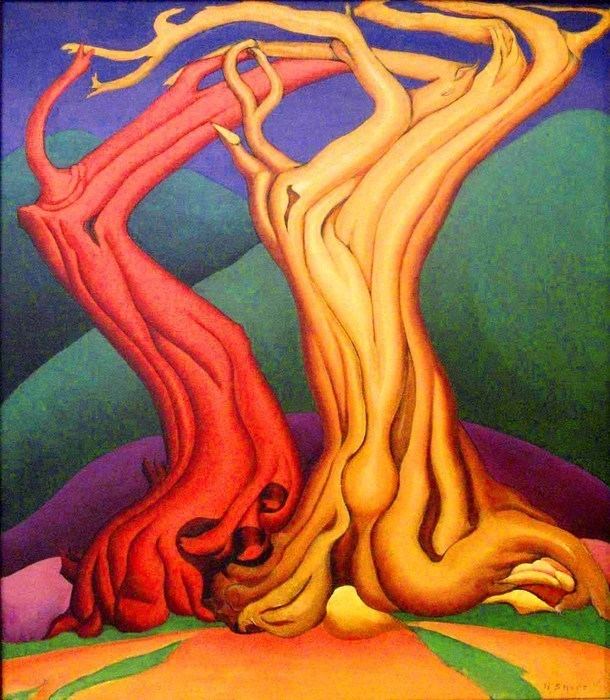
Untitled (Cypress Trees, Point Lobos), 1930. oil on canvas by
Henrietta Shore
Consignment at Rookleys
At Rookleys Canadian Art, we are actively seeking works by Henrietta Shore for consignment, offering consignment rates far lower below what auction houses charge. If you have a piece by Henrietta Shore to consign, please contact us at info@rookleys.com to discuss these opportunities further.
Bibliography
Christie's. “Edward Weston (1886–1958), Two Shells, 13S, 1927.”
Heffel Gallery Limited. “Henrietta Shore (1880–1963).” In Canadian, Impressionist & Modern Art, November 20, 2024, lot 134, Portrait of a Young Girl.
Hernandez, Jo Farb, ed. Henrietta Shore: A Retrospective Exhibition, 1900–1963. Essays by Roger Aikin and Richard Lorenz. Monterey, CA: Monterey Peninsula Museum of Art Association, 1986.
Los Angeles County Museum of Art. “Henrietta Shore, Jean Charlot, circa 1927.”
Martin, Joan Gilbert. “A Gift to the City: The Post Office Murals of Henrietta Shore.” Museum of Art and History, Santa Cruz, January 16, 2016.
Whitney Museum of American Art. “Henrietta Shore.” Accessed October 10, 2026.
Whitney Museum of American Art. “Henrietta Shore, Trail of Life, c. 1923.” Accessed October 10, 2026.