
Few Canadian artists painted with the energy, emotion, and exuberance of Sam Borenstein. Known for his vibrant depictions of Montreal neighbourhoods, Laurentian villages, and portraits of family and friends, Borenstein transformed everyday subjects into dynamic paintings filled with movement and colour. His bold use of colour, expressive brushwork, and distorted perspectives reflected the influence of artists he greatly admired, including Vincent van Gogh, Maurice de Vlaminck, Maurice Utrillo, and Chaim Soutine, while remaining uniquely his own.
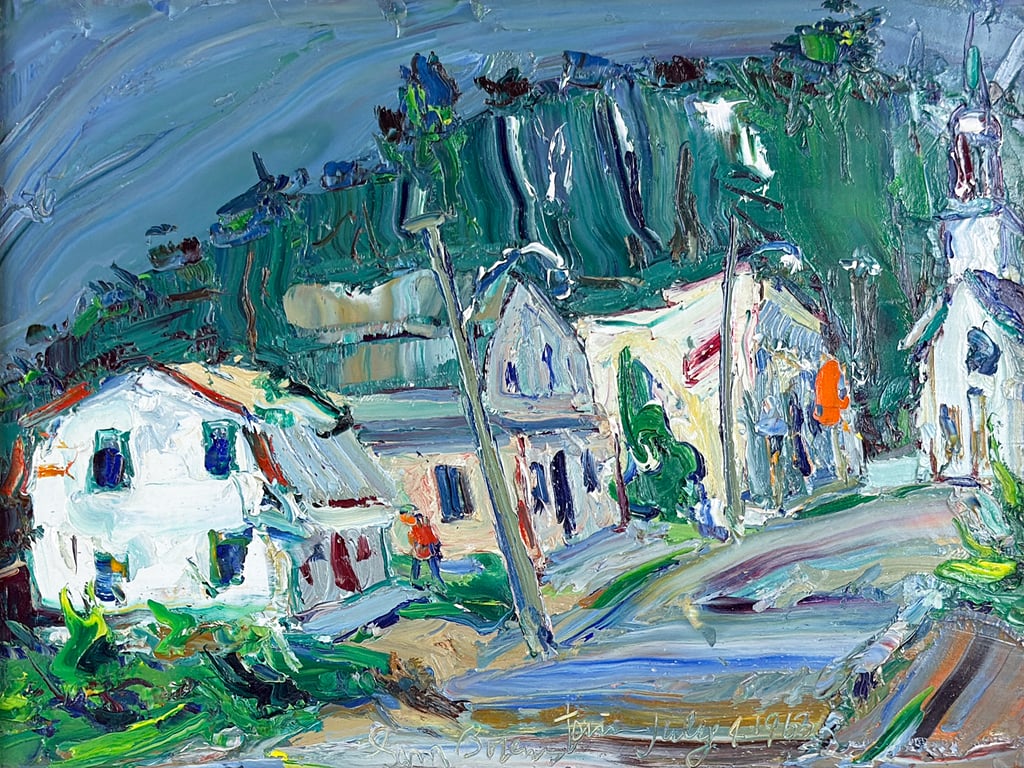
Born in 1908 in what is now Lithuania, Borenstein spent his early years in Eastern Europe before immigrating to Montreal with his father and one of his sisters in 1921. His path to becoming an artist was anything but traditional. After spending two years in Ottawa apprenticing as a furrier, he returned to Montreal and worked as a cutter in a garment factory. Although he received little formal artistic training, he pursued art whenever possible, attending evening classes in sculpture with Elzéar Soucy and studying drawing under Adam Sheriff Scott and John Young Johnstone.
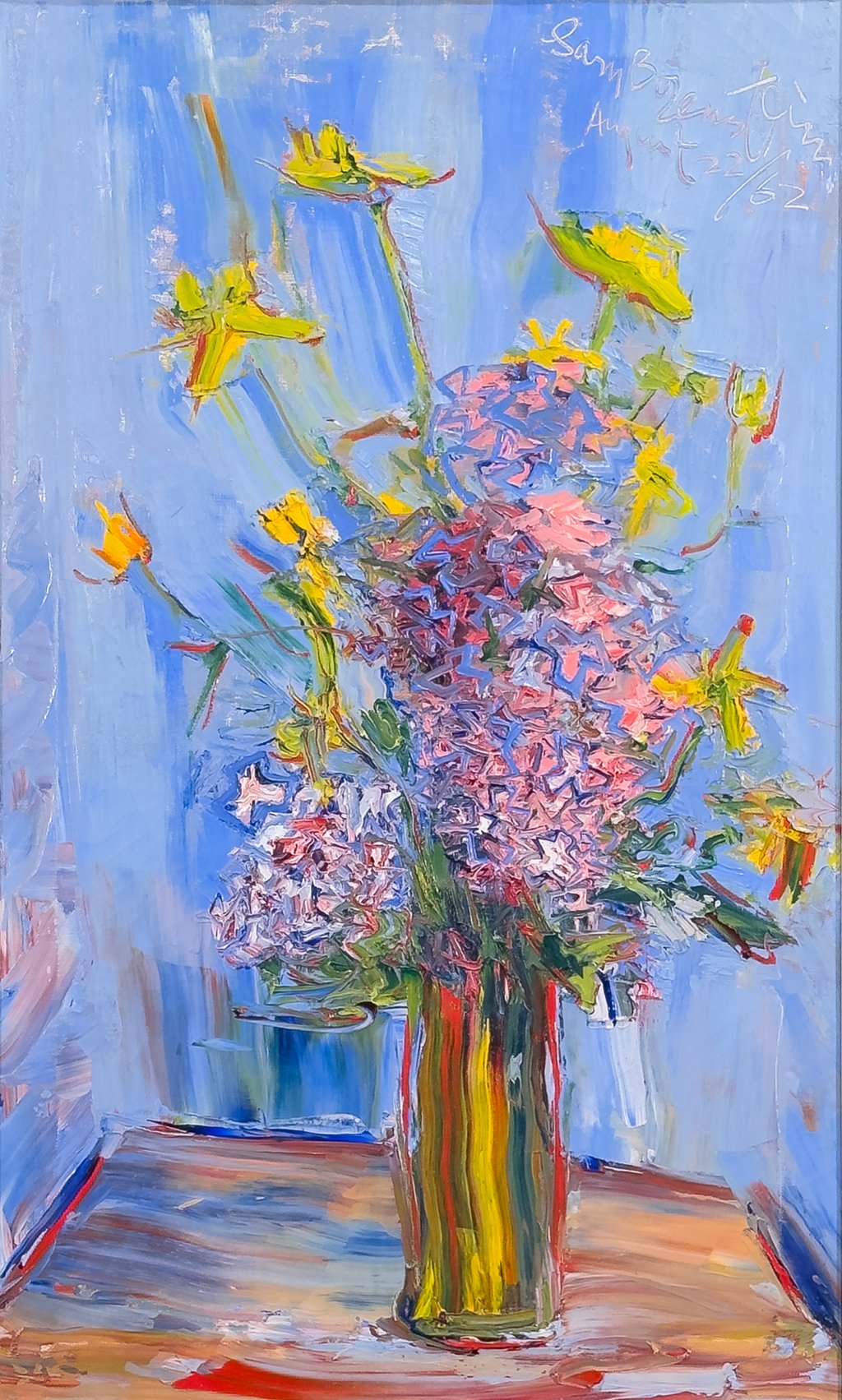
Sam Borenstein, Flowers, oil on canvas, 1962
Borenstein also became immersed in Montreal's artistic community, forming friendships with painters such as Alexandre Bercovitch, Fritz Brandtner, Herman Heimlich, and Louis Muhlstock. His first solo exhibition was held in 1934 at Montreal's Coffee House café, an important milestone in a career that was just beginning to take shape.
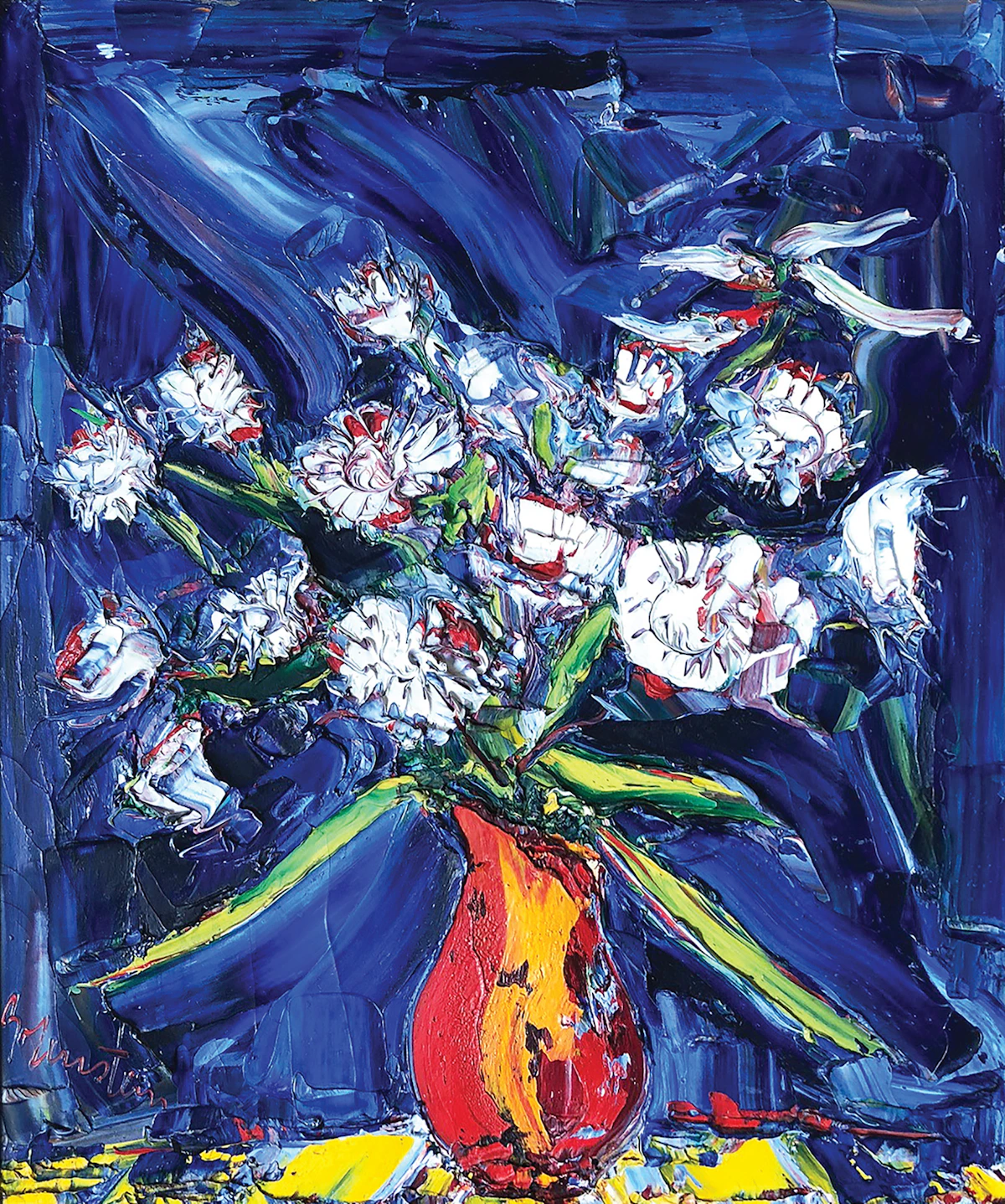
Sam Borenstein, White Flowers and Dark Background,
oil on canvas, 1958
A turning point came in 1939 when Borenstein spent six months painting in Brittany, France. There he finally had the opportunity to study firsthand the works of the European artists who had inspired him for years. The experience strengthened his artistic eye and helped refine the expressive style that would become his hallmark style.
Beginning in the 1940s, Borenstein spent considerable time painting in the Laurentians, where his colourful interpretations of villages, landscapes, and daily life attracted growing attention. He depicted bustling city streets, rural towns, and portraits, approaching each subject with vitality. His paintings often seem alive with movement, drawing the viewer into scenes that are personal and unmistakably Canadian.

A.Y.Jackson, Sam Borenstein, Goodridge Roberts, Joan Roberts, Ralph Burton at the Sir George Williams University Sam Borenstein Retrospective, 1966
Recognition gradually followed. In 1966, just three years before his death, Borenstein was honoured with a retrospective exhibition at the Art Gallery of Sir George Williams University, now part of Concordia University. His work also entered major public collections, including the collection of the National Gallery of Canada, which holds notable paintings such as Saint Dominique Street, Montreal (1942) and Rooftops (1943).
When Borenstein died in 1969, he remained underappreciated by much of the Canadian art establishment. In the decades since, however, his reputation has grown considerably. A retrospective exhibition in 1978 helped renew interest in his work, while his daughter, Joyce Borenstein, introduced his story to a wider audience through her acclaimed documentary The Colours of My Father (1992), which received an Academy Award nomination.

Sam Borenstein, Saint Dominique Street, Montreal, 1942
Major exhibitions have continued to celebrate his achievements. A comprehensive retrospective at the Montreal Museum of Fine Arts in 2005–2006 travelled to several provinces, bringing his work to audiences across Canada. His paintings were also featured prominently in the 2008 exhibition Jewish Painters of Montreal, organized by the McCord Stewart Museum and the Musée national des beaux-arts du Québec. In 2011, the Yeshiva University Museum in New York presented another major retrospective, further cementing his place within the broader history of North American art.
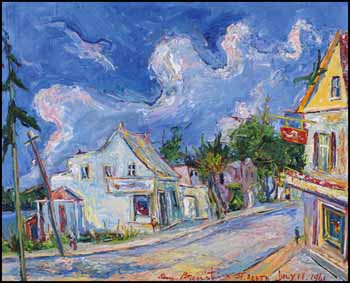
Sam Borenstein, Ste-Agathe, oil on canvas
Today, Borenstein's legacy continues to grow. A street in Montreal's Saint-Laurent borough was named after him, Place Sam-Borenstein, recognizing his lasting contribution to the city's cultural history. Interest in his work has also increased dramatically among collectors, with demand for his paintings rising steadily and values appreciating significantly over recent decades.
Once overlooked, Sam Borenstein is now recognized as one of Canada's most distinctive modern painters. Through his fearless use of colour, expressive compositions, and personal vision, he created a body of work that remains as vibrant and compelling today as when it was first painted.
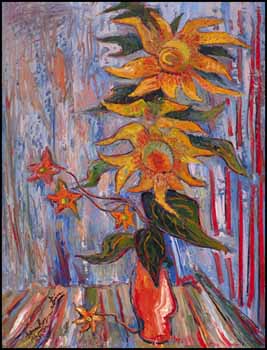
Sam Borenstein, Sunflowers, oil on canvas
Consignment at Rookleys
At Rookleys Canadian Art, we are actively seeking works by Sam Borenstein for consignment, offering consignment rates far lower below what auction houses charge. If you have a painting by Sam Borenstein to consign, please contact us at info@rookleys.com to discuss these opportunities further.

Sam Borenstein, Rooftops, 1943
Works Cited
“Samuel Borenstein.” Cowley Abbott, Cowley Abbott Canadian Art Auctioneers, https://cowleyabbott.ca/auction-results/artists/samuel-borenstein.
“Samuel Borenstein.” Heffel Fine Art Auction House, https://www.heffel.com/Artist/5A5D5D/Borenstein_Samuel/.
“Sam Borenstein.” National Gallery of Canada, https://www.gallery.ca/collection/artist/sam-borenstein.
“Sam Borenstein.” Mayberry Fine Art, https://mayberryfineart.com/artists/1025/sam-borenstein.
Kuhns, William, and Leo Rosshandler. Sam Borenstein. McClelland and Stewart, 1978.