
Born in Verdun, Quebec, on September 11, 1877, May was the daughter of Evelyn Henrietta Walker and Edward May, a self-made businessman and mayor of Verdun. As the fifth of ten children, she postponed her formal education into her mid-twenties to help raise her younger siblings. In 1902, she enrolled at the Art Association of Montreal (AAM), where she studied with influential instructors Alberta Cleland and William Brymner. Brymner’s emphasis on French modernism, particularly Impressionism and Post-Impressionism, had a lasting impact on her development. She twice received AAM scholarships and exhibited early watercolours in the 1910 AAM Annual Spring Exhibition.
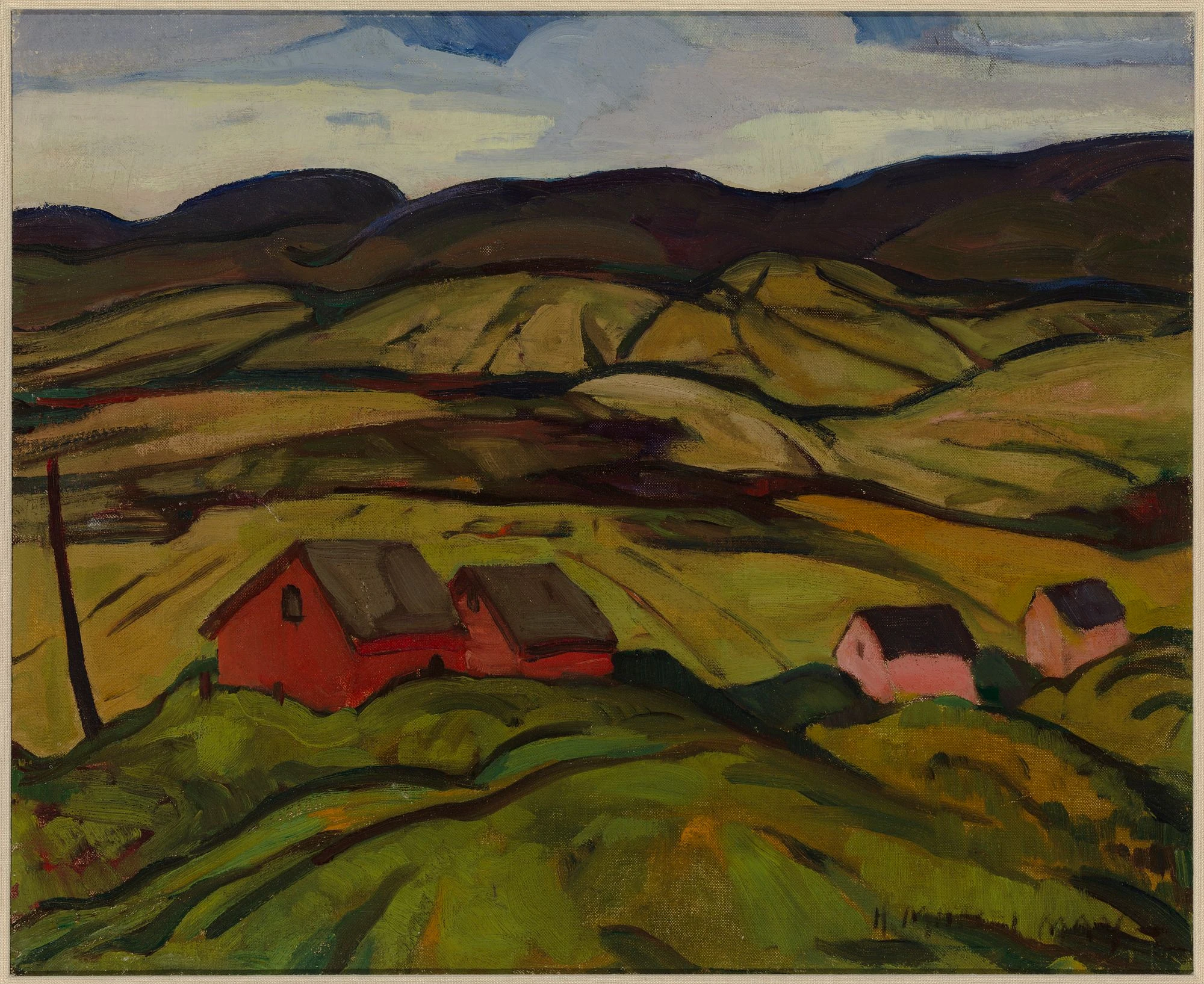
Encouraged by Brymner to broaden her artistic horizons, May traveled to France, England, and Holland in 1912 with fellow artist Emily Coonan. She immersed herself in European museums, studied with James Wilson Morrice, and learned the language of Impressionism, which significantly affected her entire artistic career. She returned to Montreal in 1913 “radiant,” as fellow artist Anne Savage recalled, and immediately established a studio on St. Catherine Street.

May quickly gained recognition. In 1913 the National Gallery of Canada purchased three of her paintings, eventually acquiring additional works over the next decade. During the First World War, she was commissioned by the Canadian War Memorials Fund to document women working in Montreal munitions factories. At $250 per month, the commission was a significant professional achievement for any artist at the time.
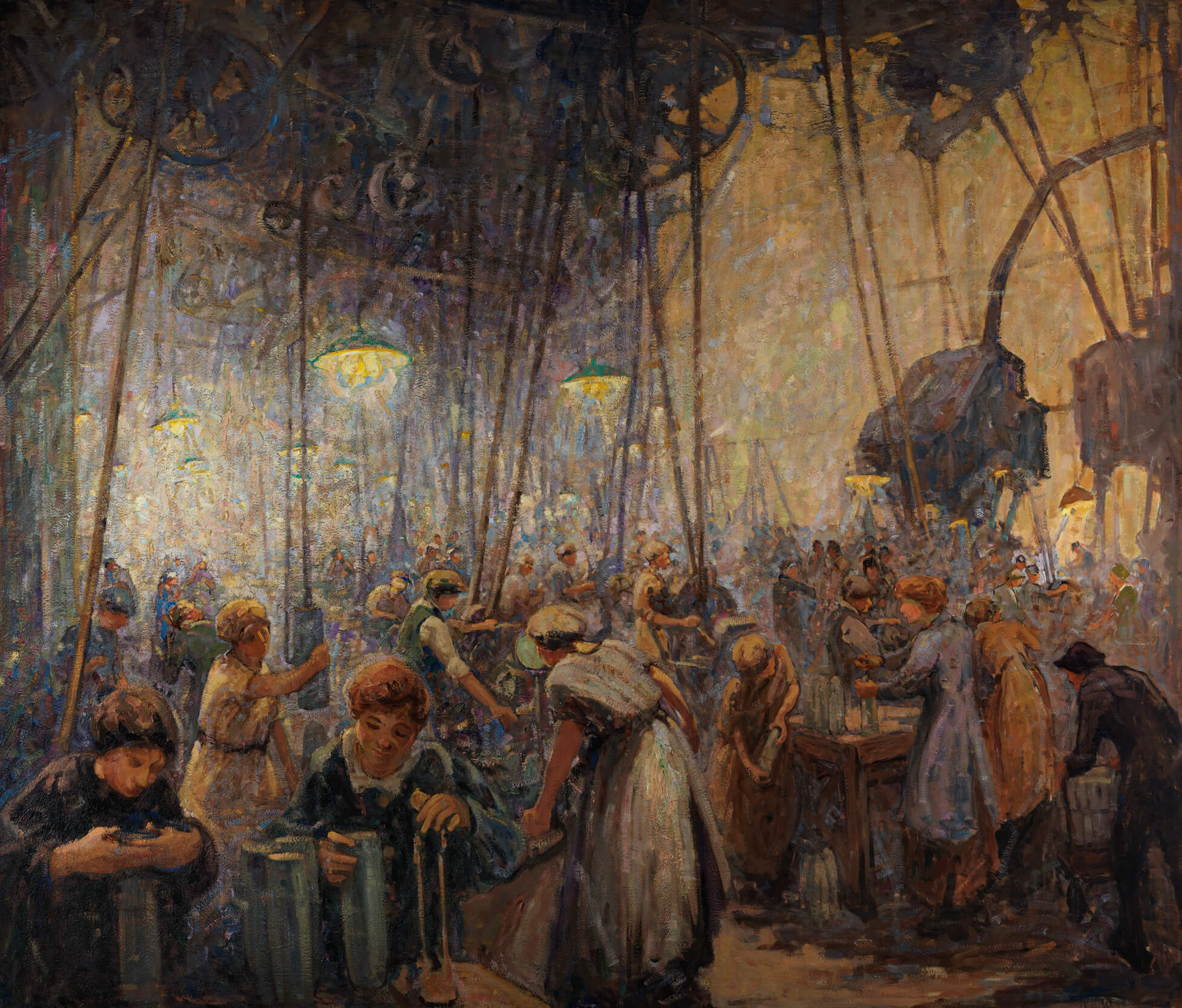
In 1920, May became a founding member of the Beaver Hall Group, one of the most progressive and artistically ambitious collectives in Canada. Initially guided by A.Y. Jackson, the group was notable for the central role played by its female members, including May, Prudence Heward, Lilias Torrance Newton, Nora Collyer, Anne Savage, Sarah Robertson, and Emily Coonan. While the group officially disbanded around 1924, these women continued to work, exhibit, and support one another professionally. May’s landscapes from this period reflect the growing influence of Post-Impressionism and the boldly modern aesthetics emerging across Canada.
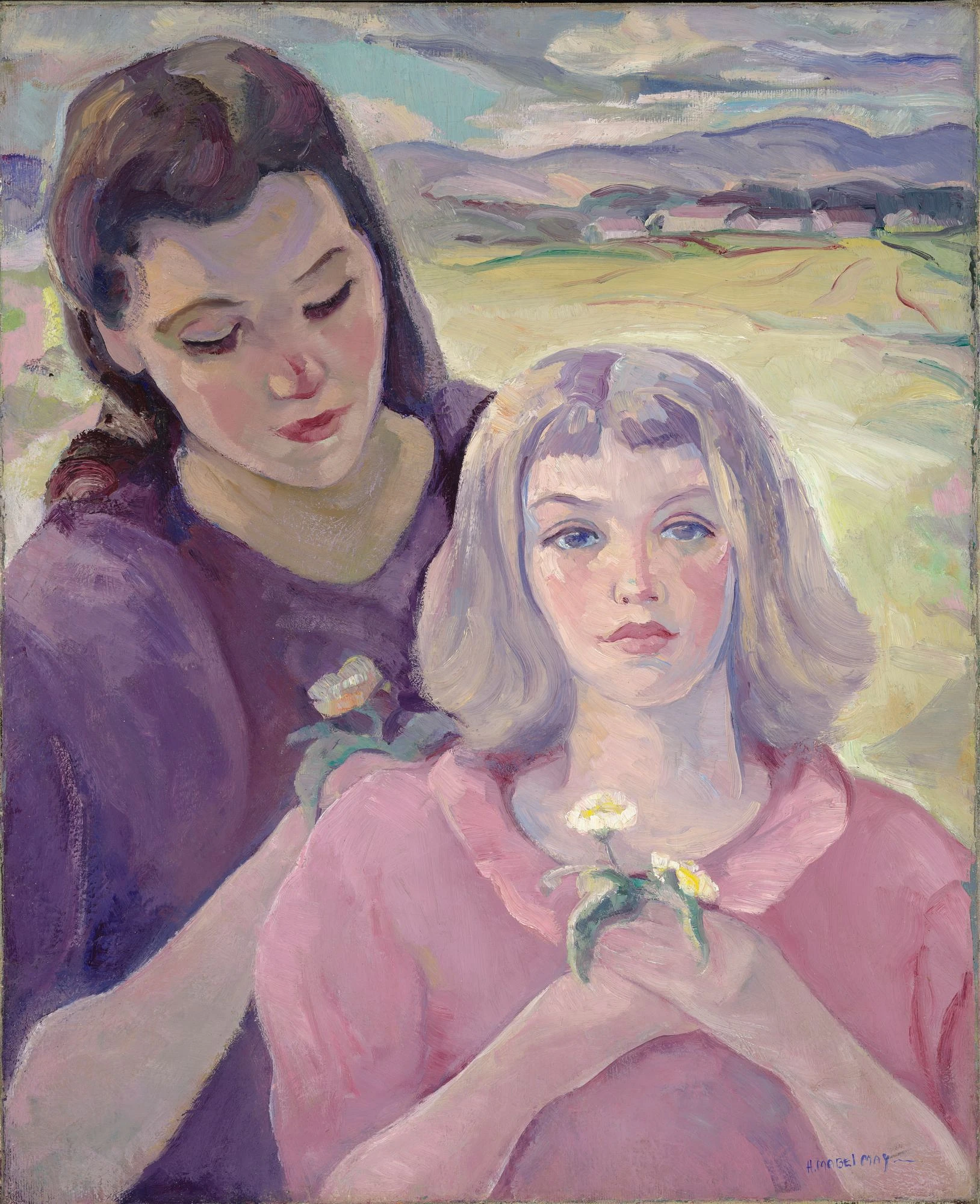
Violet et Rose, c 1930-1940, oil on canvas by Henrietta Mabel May
After the Beaver Hall Group dissolved, May continued to help make new artistic networks. She was a founding member of the Canadian Group of Painters in 1933, the official successor to both the Group of Seven and the Beaver Hall Group. Her participation aligned her with the most prominent artists working in Canada during the interwar period.
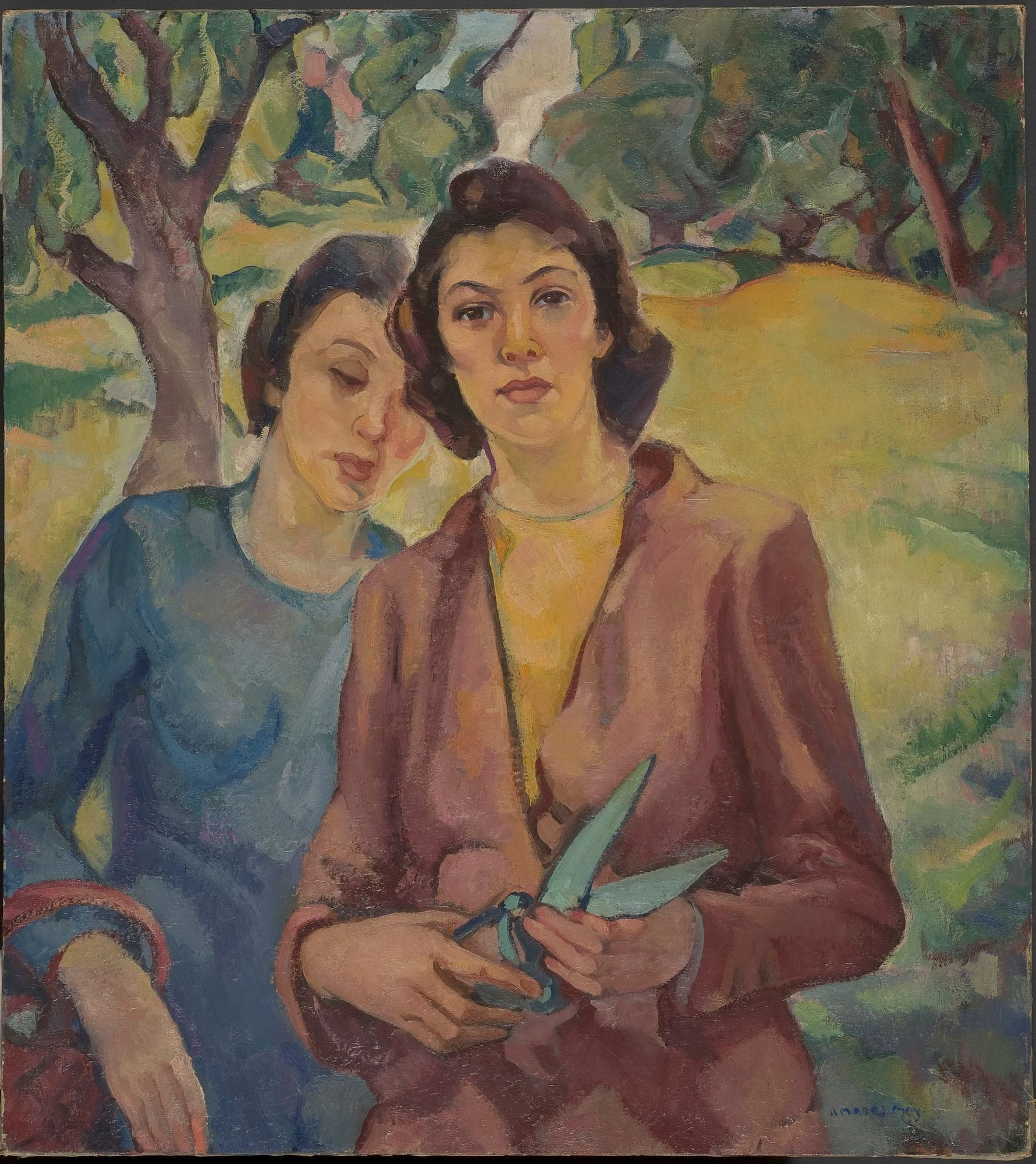

May returned to Montreal in 1950 and moved to Vancouver shortly thereafter to be near her sisters. She remained active well into her nineties, painting, teaching privately, and exhibiting her work. In 1952, the Vancouver Art Gallery held a major retrospective of one hundred of her paintings.
May’s primary medium was oil, and her early work clearly demonstrates Impressionism: soft edges, luminous colour, and fluid brushwork. After 1920, her style evolved to incorporate the influence of the Group of Seven and broader modernist trends. Her landscapes, particularly those from Hudson, the Eastern Townships, Baie-Saint-Paul, and the West Coast, balance clarity with expressive colour. Art critic Albert Laberge praised her originality and strength of palette.
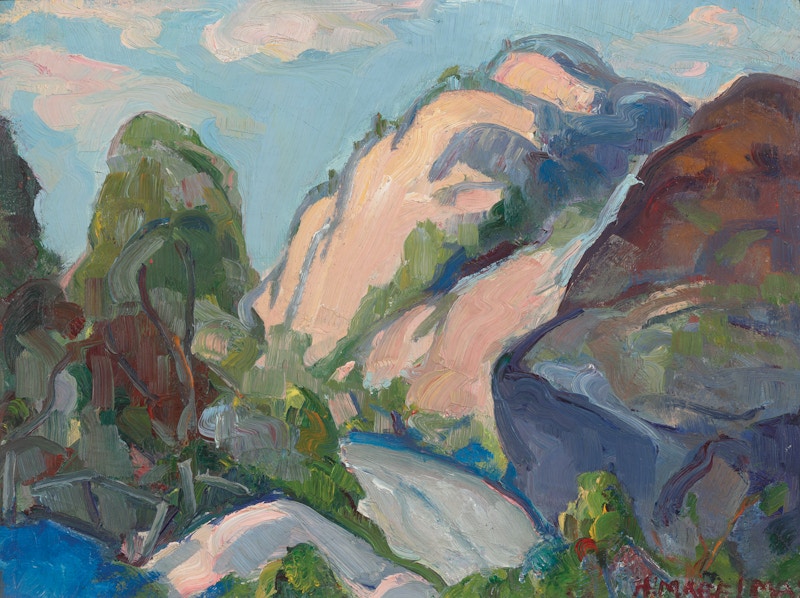
On the Way to Horseshoe Bay (Mountain Landscape) by Henrietta Mabel May
In the late 1930s, after joining the I AM religious group (a theosophical offshoot), May adjusted her palette in accordance with their belief that dark colours carried negative energy. This shift produced works that were increasingly airy and bright, another stage in her stylistic evolution.

Throughout her career, May exhibited with the Art Association of Montreal, the Beaver Hall Group, the Canadian Group of Painters, Le Caveau, and the Vancouver Art Gallery, among others. Her paintings are now held in major Canadian institutions including the National Gallery of Canada, the Musée des beaux-arts de Montréal, the Musée national des beaux-arts du Québec, the Vancouver Art Gallery, and the Canadian War Museum.
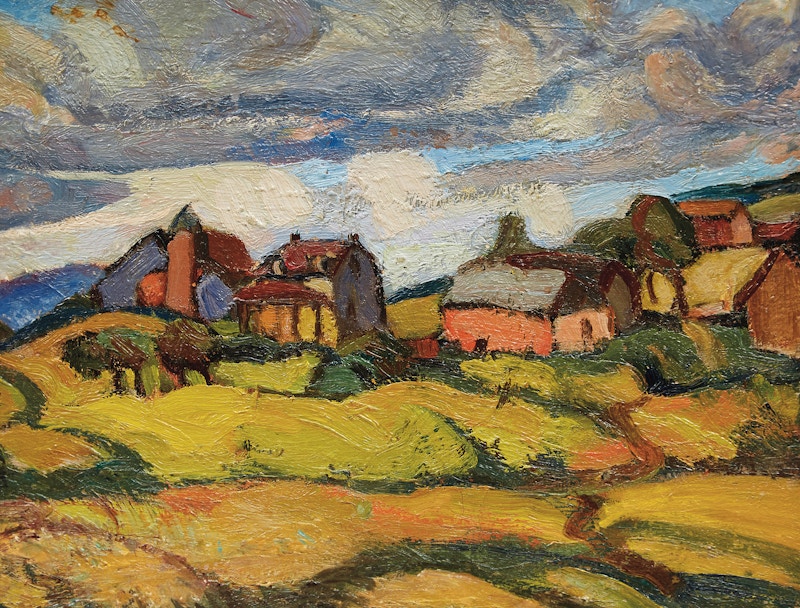
Celebrated in her lifetime as the “Emily Carr of Montreal,” Henrietta Mabel May remains an important figure in the history of Canadian modernism. Her landscapes, figure paintings, and wartime works continue to reveal her distinct synthesis of Impressionist colour and modernist structure.
Consignment at Rookleys
At Rookleys Canadian Art, we are actively seeking works by Henrietta Mabel May for consignment, offering consignment rates far lower below what auction houses charge. If you have a painting by Henrietta Mabel May to consign, please contact us at info@rookleys.com to discuss these opportunities further.