
Born in Saint-Hilaire, Quebec, Borduas showed early talent in drawing and painting, which led him to study at the École du Meuble in Montreal, an institution focused on decorative arts. Under the guidance of his teachers, he developed a keen interest in modern European painting, particularly the work of Paul Cézanne, Wassily Kandinsky, and the Surrealists. These influences would later inform his pioneering approach to abstraction.
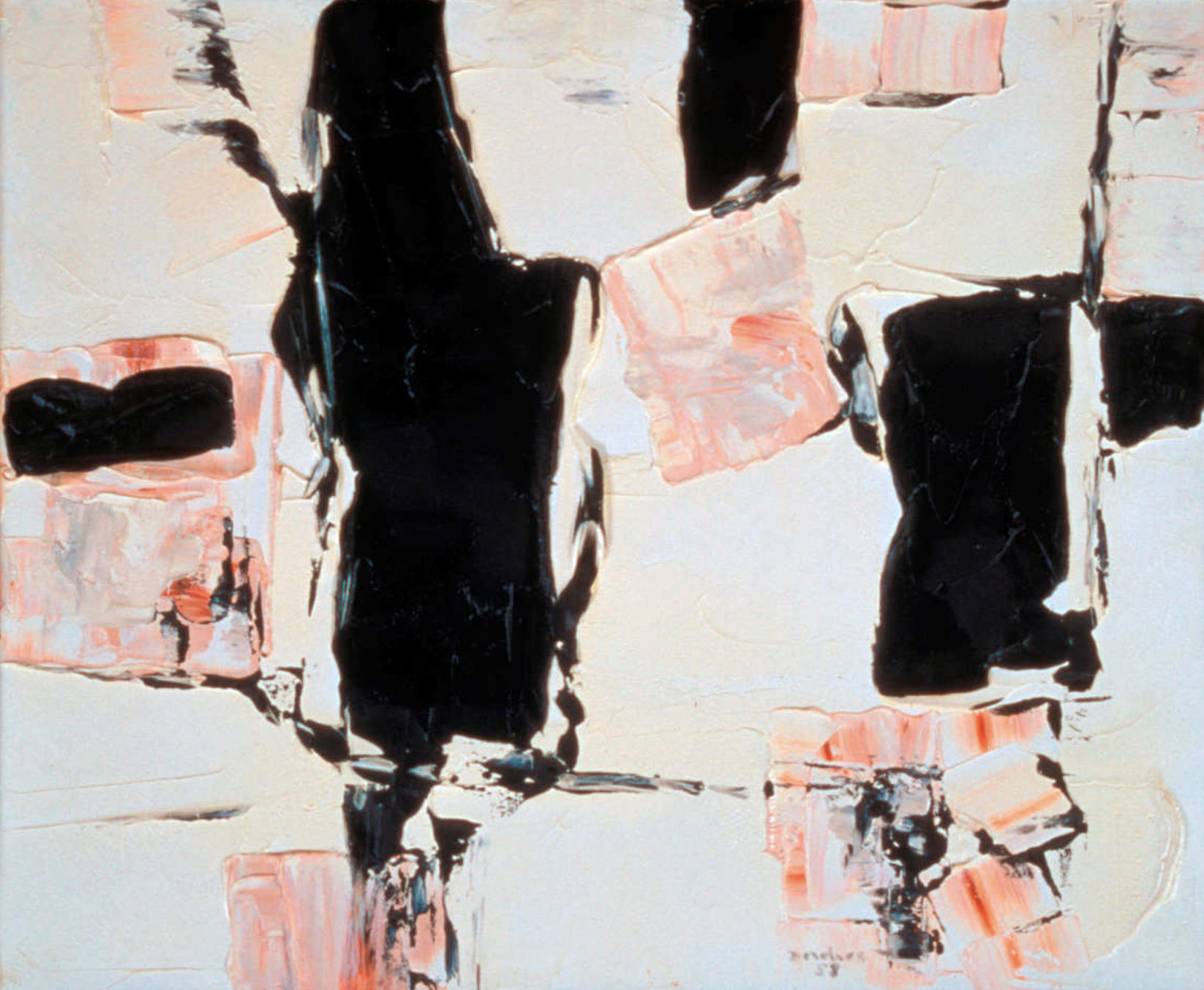
Borduas’s early work remained largely figurative, often reflecting his Quebecois heritage and rural upbringing. By the late 1930s and early 1940s, however, he had begun experimenting with non-representational forms, combining expressive brushwork with subtle, poetic symbolism that hinted at the ideas he would later develop with Les Automatistes. In 1937–1938, he traveled to Paris to study briefly at the Académie de la Grande Chaumière, where he encountered European modernism firsthand, including the work of Surrealists and abstractionists. This experience deepened his interest in abstraction and influenced the techniques and ideas he would bring back to Quebec. During this period, he also taught at the École du Meuble in Montreal, where he mentored a new generation of artists, including several who would become core members of Les Automatistes, such as Jean-Paul Riopelle. His teaching emphasized creative freedom, experimentation, and the expressive potential of painting, laying the groundwork for the abstract and automatic techniques that would define his later work.

In the 1940s and 1950s, Borduas emerged as the leader of Les Automatistes, a group of Quebec artists dedicated to exploring automatic painting, abstraction, and the liberation of artistic expression from traditional academic rules. Jean-Paul Riopelle was a member and he went on to become one of Canada’s most celebrated abstract painters. Borduas’s paintings from this period are characterized by vigorous brushwork and a focus on the act of painting as an expression of the subconscious mind.
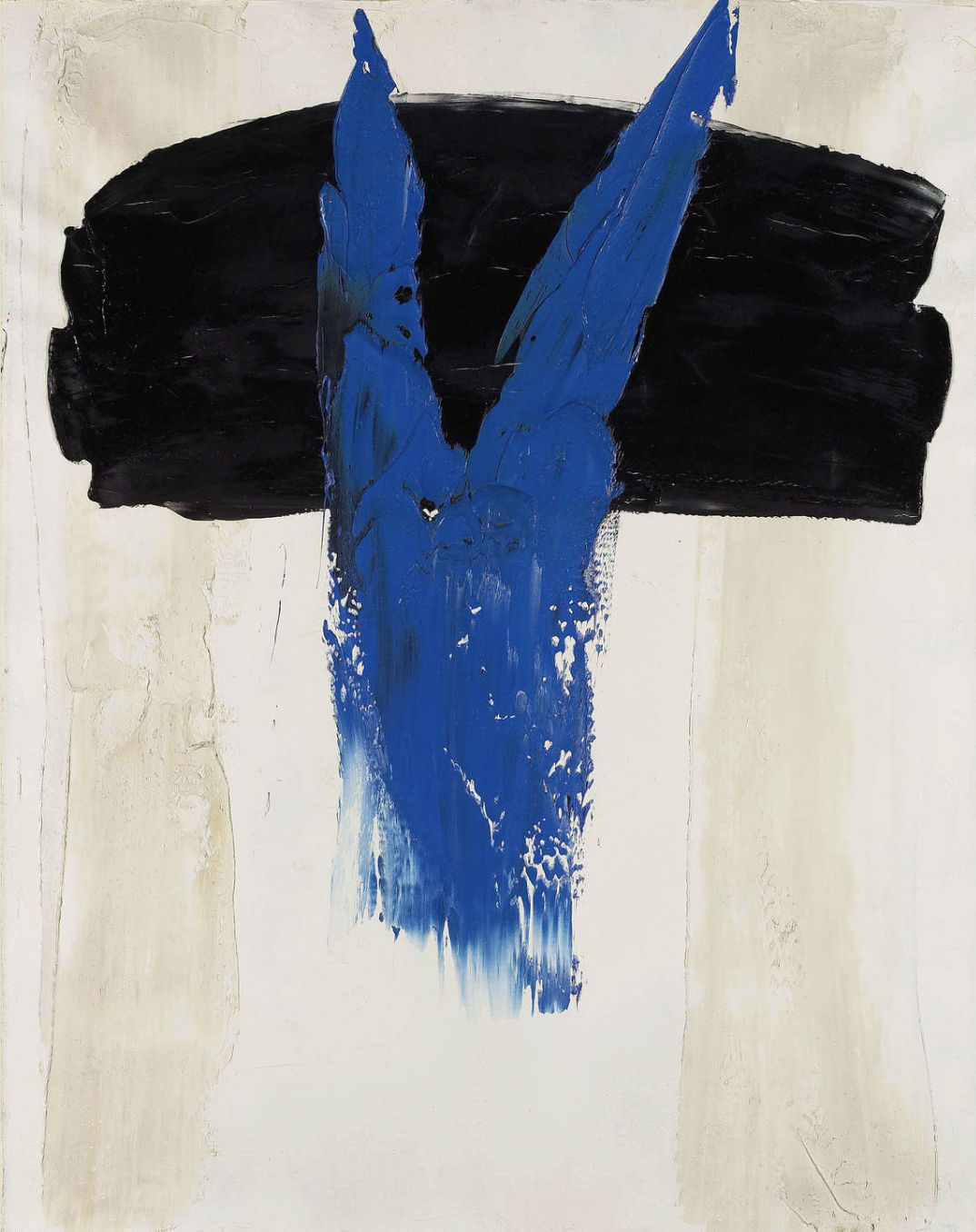
Borduas wasn’t just a painter, he was also a thinker who believed art could change society. In 1948, he wrote a document called the Refus Global manifesto. It was a very bold, public statement in which he said: the rules and expectations in Quebec were too strict, the Catholic Church had too much control over people’s lives, and artists were being limited by outdated ideas about what “good” art should be.
Several of his students and colleagues signed it too. Together, they were essentially saying: “We want freedom; freedom to think, to create, to live differently, and for society to allow that.” At the time, this was shocking because Quebec in the 1940s was very conservative, and most people were expected to follow tradition and the Church’s teachings very closely. Borduas’ statement challenged not just art, but everyday life and social rules.
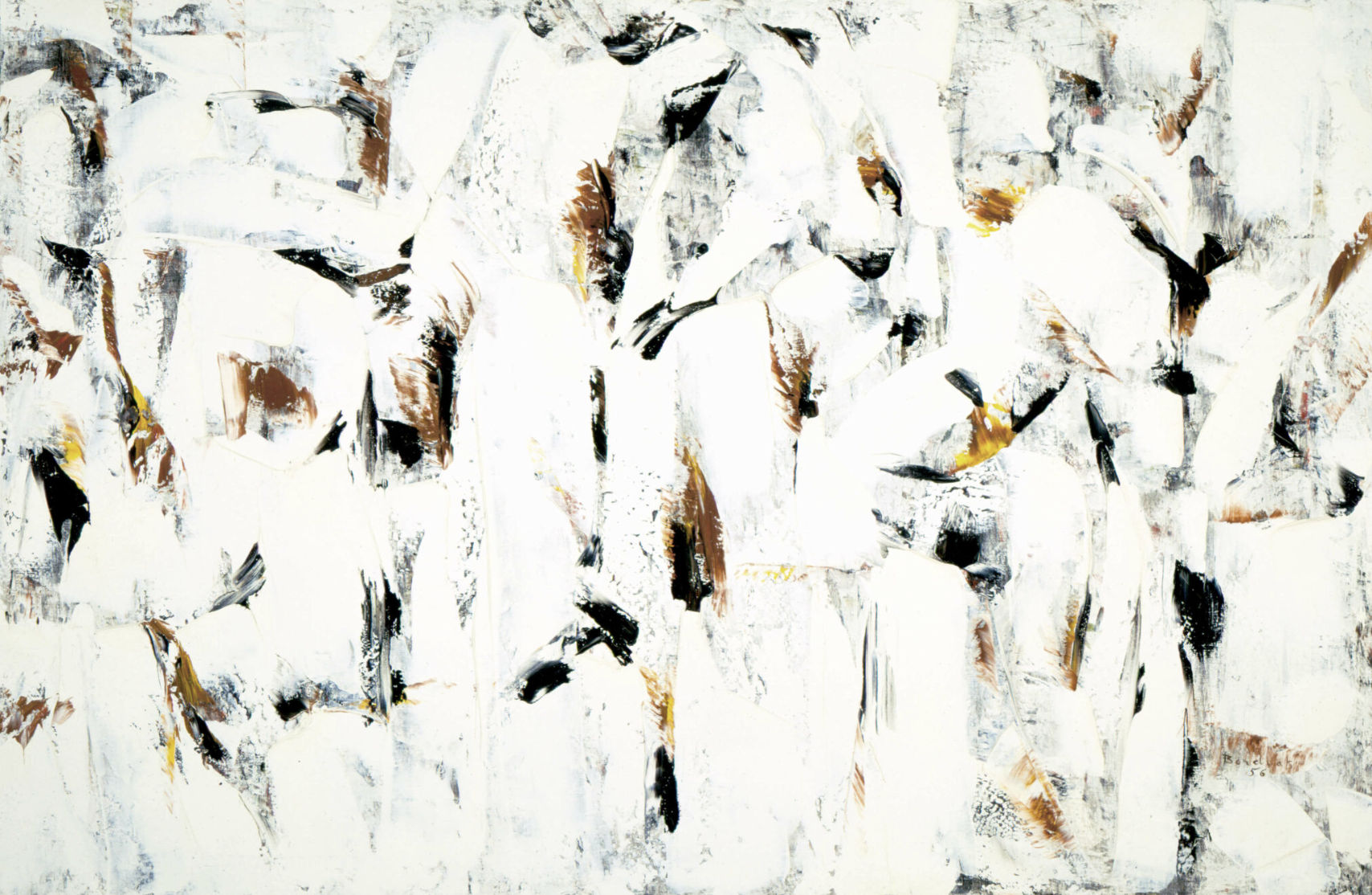
After publishing the Refus Global manifesto in 1948, Borduas faced significant professional and personal consequences. The manifesto openly criticized the dominant role of the Catholic Church and the conservative social values of Quebec, and as a result, he was dismissed from his teaching position at the École du Meuble. This not only meant a loss of income but also limited his access to official exhibitions, commissions, and recognition within the province’s artistic establishment. Despite these setbacks, Refus Global became a turning point in Quebec culture, inspiring later movements that embraced freedom, creativity, and individuality. Today, it is recognized as a landmark document that demonstrates how art and ideas can challenge the status quo and shape society.
Undeterred, Borduas continued to paint throughout the 1950s, increasingly embracing abstraction. His works from this period are characterized by non‑representational forms, expressive brushwork, and subtle harmonies of tone and colour, which was a dramatic shift from his earlier figurative and landscape work. This evolution reflected his belief that painting could function as a spiritual and intellectual inquiry, not just a depiction of the visible world.
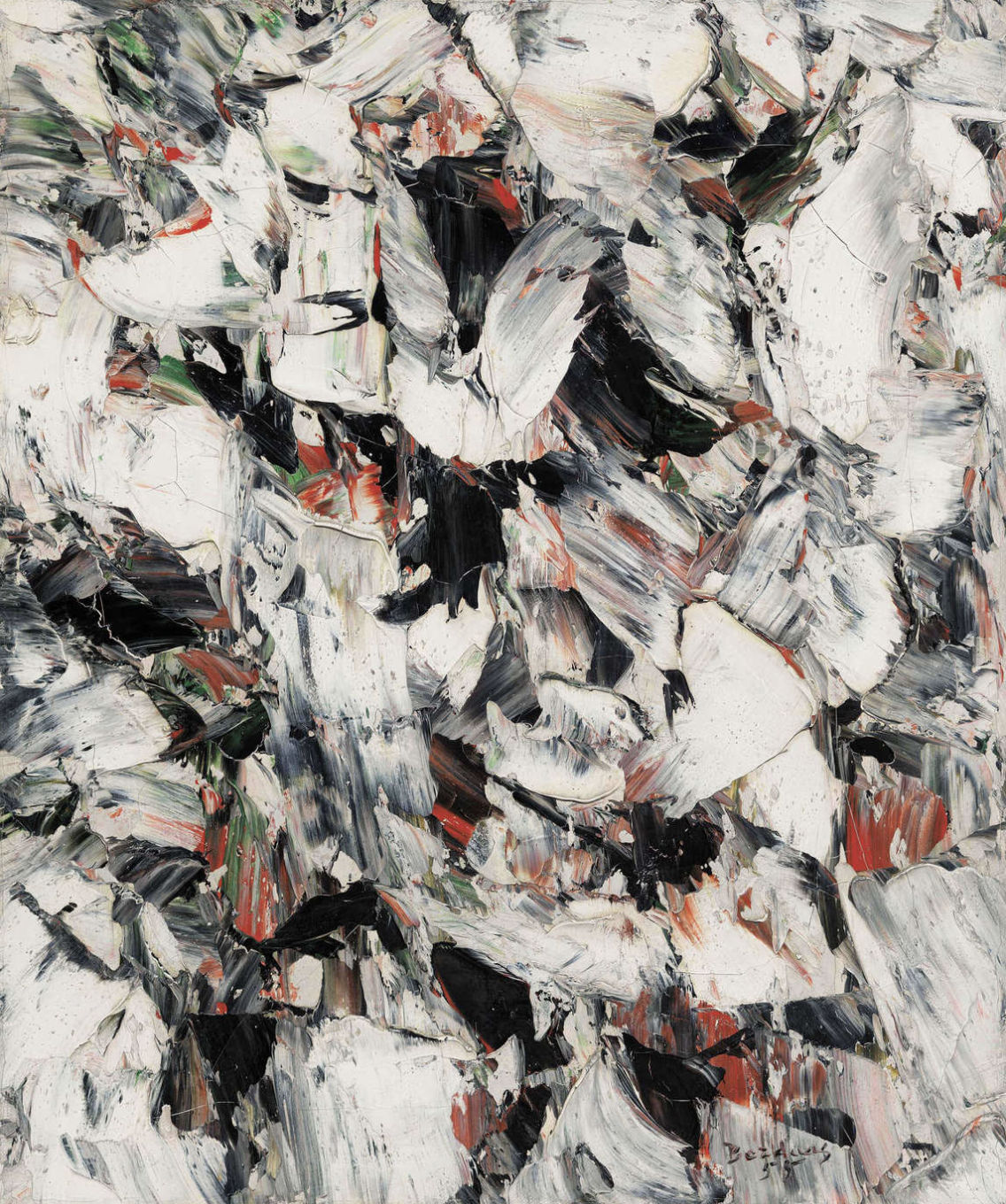
Between 1953 and 1955, Borduas spent extended periods in New York, where he encountered the work of American Abstract Expressionists such as Willem de Kooning, Jackson Pollock, and Mark Rothko. While he absorbed ideas about gesture, scale, and freedom of form from that scene, he remained true to a distinct voice based on his own experiences and earlier experiments with automatism and expressive mark‑making.
Despite being marginalized in Quebec’s mainstream art scene during these years, Borduas persisted in exhibiting his work internationally, including in Paris and New York, and continued producing influential abstract paintings until his death in 1960. His commitment to artistic freedom, even in the face of professional setbacks and social pushback, helped lay the groundwork for later modernist movements in Canadian art.

Borduas’s contribution to Canadian art was recognized during his lifetime, and posthumously he has been celebrated as one of the most influential modernist painters in Canada. His works are represented in major public collections, including the National Gallery of Canada, the Montreal Museum of Fine Arts, and the Musée d’art contemporain de Montréal.
Paul-Émile Borduas died in 1960 at the age of 55, leaving behind a body of work that continues to inspire artists and viewers alike. Today, he is remembered not only for his revolutionary paintings but also for his role as a teacher, mentor, and cultural provocateur who helped redefine the possibilities of art in Quebec and across Canada.
Consignment at Rookleys
At Rookleys Canadian Art, we are actively seeking works by Paul-Émile Borduas for consignment, offering consignment rates far lower below what auction houses charge. If you have a painting by Paul-Émile Borduas to consign, please contact us at info@rookleys.com to discuss these opportunities further.
Bibliography
Art Canada Institute. Paul‑Émile Borduas: Life & Work. Toronto: Art Canada Institute, 2014. https://www.aci‑iac.ca/art‑books/paul‑emile‑borduas/
Art Canada Institute. “Paul‑Émile Borduas: Biography.” Art Canada Institute. https://www.aci‑iac.ca/art‑books/paul‑emile‑borduas/biography/
Art Canada Institute. “Selected Sources and Resources on Paul‑Émile Borduas.” Art Canada Institute. https://www.aci‑iac.ca/art‑books/paul‑emile‑borduas/sources‑and‑resources/
Des Rochers, Guy. Paul‑Émile Borduas. Montreal: Éditions du Musée du Québec, 1966.
Gagnon, François‑Marc. Paul‑Émile Borduas: A Critical Biography. Translated by Peter Feldstein. Montreal & Kingston: McGill‑Queen’s University Press, 2013.
Gauvin, Serge. Paul‑Émile Borduas: Peintures et Dessins. Montreal: Musée d’art contemporain de Montréal, 1990.
MacDonald, Colin S., and Serge Lemoine. Canadian Art in the Twentieth Century. Ottawa & Toronto: National Gallery of Canada, 1990.
Nasgaard, Roald, and Ray Ellenwood. The Automatiste Revolution: Montreal, 1941–1960. Vancouver: Douglas & McIntyre; Markham, ON: Varley Art Gallery, 2009