
Born near Whitford, Alberta, Kurelek was the eldest of seven children in a Ukrainian immigrant family. As a child, he lived on prairie farms in Alberta and Manitoba, which later became the inspiration for his paintings. The rural life, prairie landscapes, and experiences of immigrant families are seen throughout his work, particularly in his paintings that show childhood games and farm labour. Despite showing artistic promise early on, Kurelek’s interest in art was not encouraged by his blue- collar parents, and he initially pursued more practical studies.
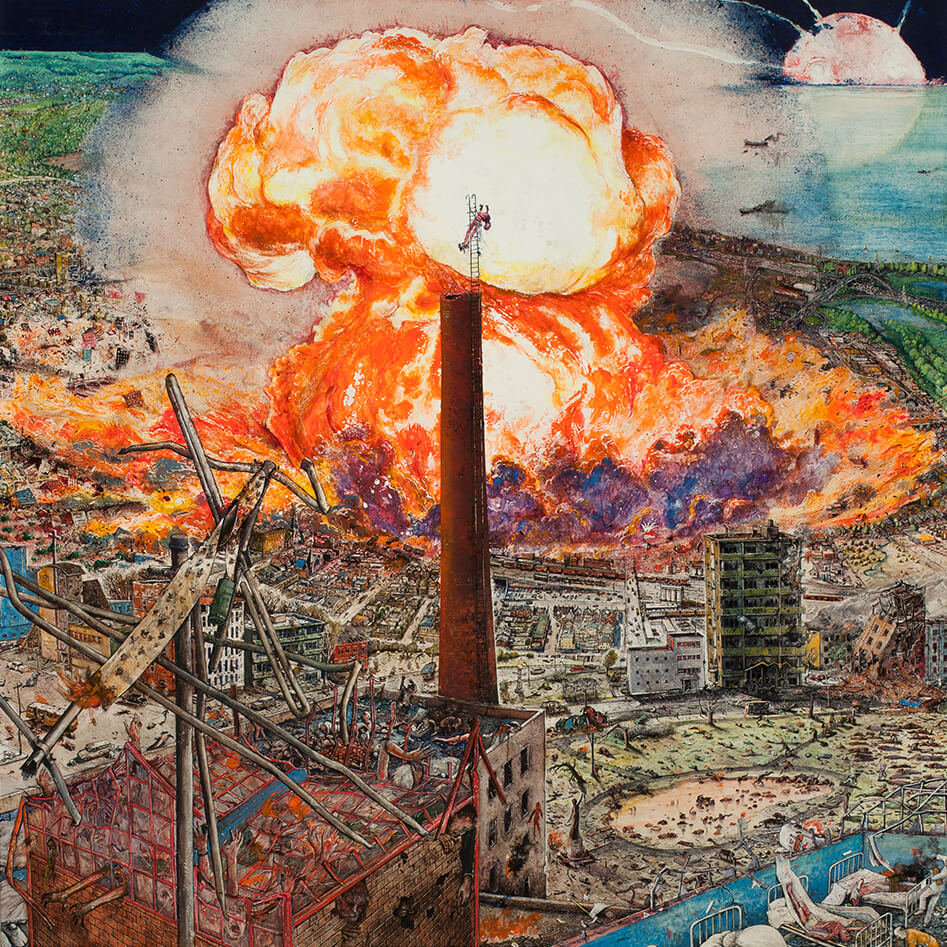
William Kurelek graduated from the University of Manitoba with a general degree in Arts, before enrolling at the Ontario College of Art in Toronto, against the wishes of his parents. While studying at the Ontario College of Art, Kurelek travelled to Mexico with the hope of securing a scholarship at the Instituto Allende in San Miguel de Allende, encouraged by friends who believed his work might qualify. He studied at the Instituto Allende for less than a year, as he did not receive a scholarship; nonetheless, the experience exposed him to Mexican art, light, and color, which influenced his later work.
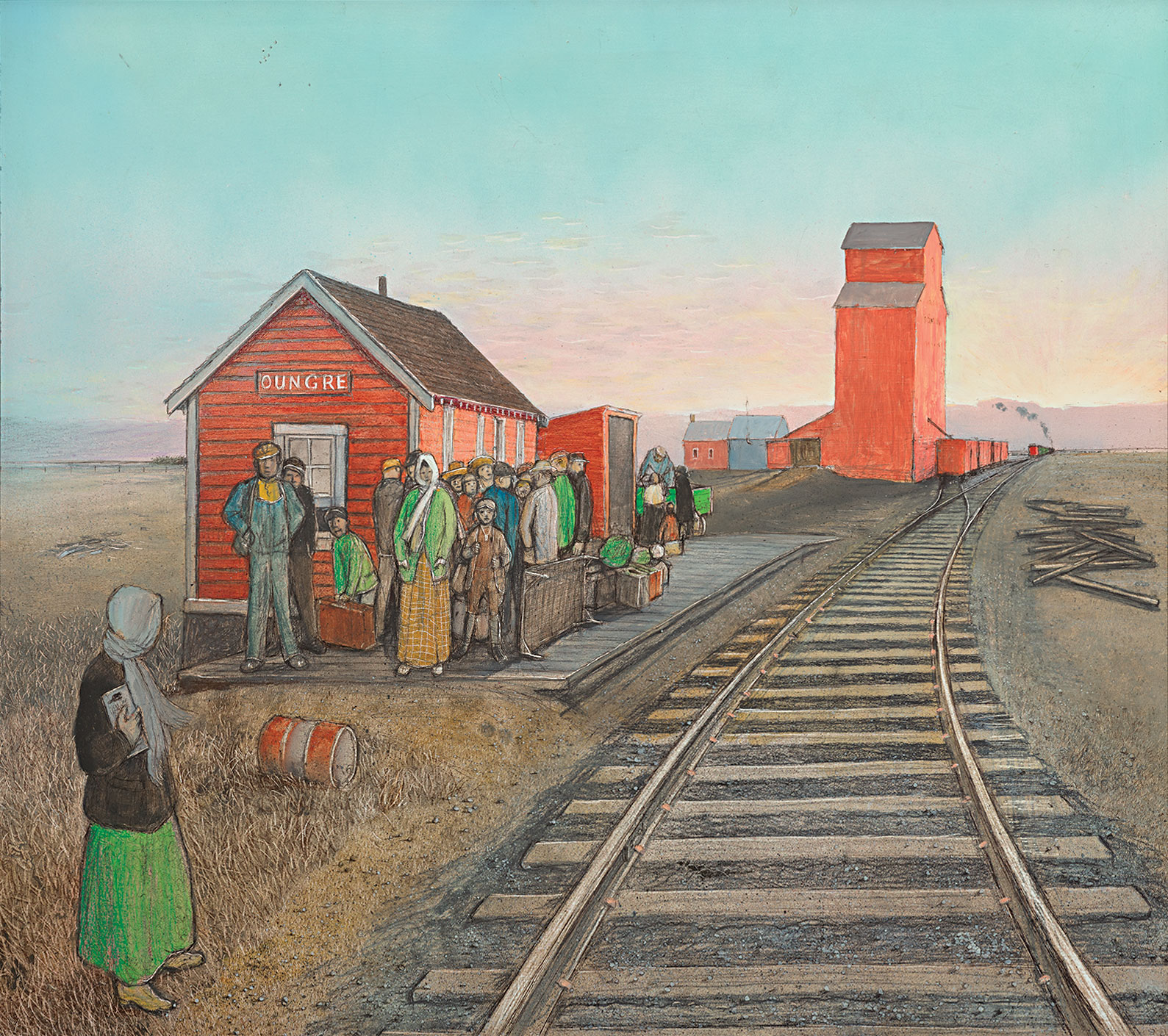
Although he received formal training, he was largely self-taught using books, absorbing influences from European painters such as Pieter Bruegel the Elder and from Mexican muralists including Diego Rivera and José Clemente Orozco. These influences contributed to his detailed, narrative compositions and his interest in creating large, complex scenes with symbolic content.
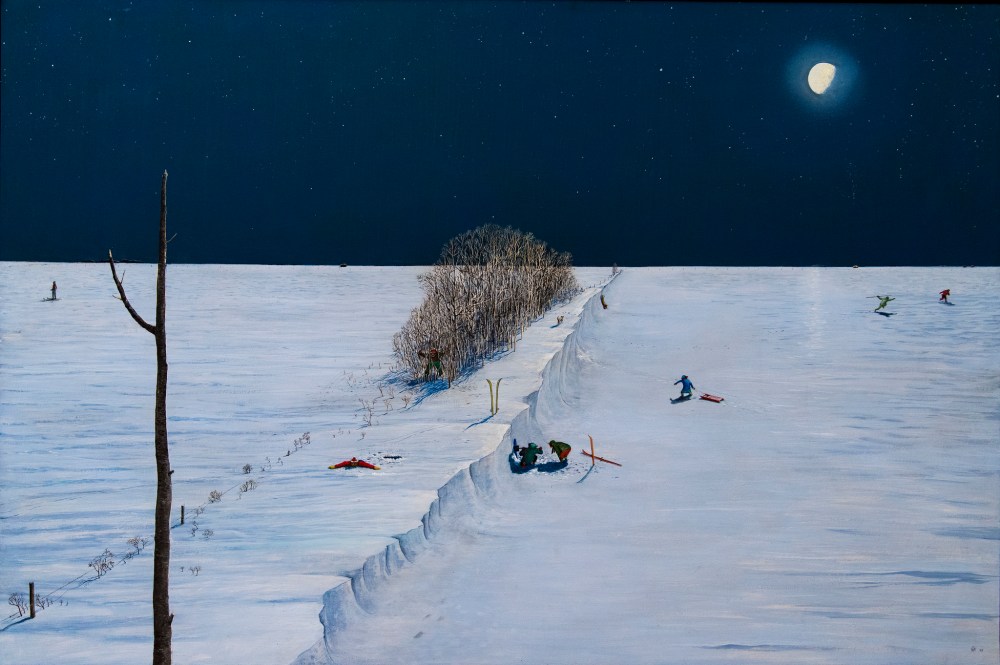
Home on the Range, 1967, mixed media on hard board by William Kurelek
In 1952, directly after his time in Mexico, Kurelek moved to England to pursue further art training and gain exposure to European art. He enrolled at the Central School of Arts and Crafts in London, where he continued to work on his figurative and narrative painting style. The move provided him with access to galleries, museums, and the heritage of European realism. During his time in England, he also exhibited in local shows, marking an important step in establishing himself as a professional artist before returning to Canada in the late 1950s.
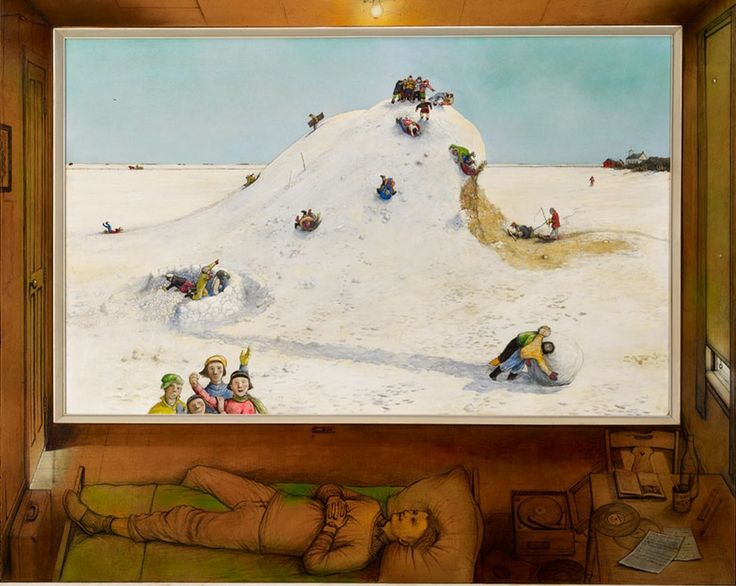
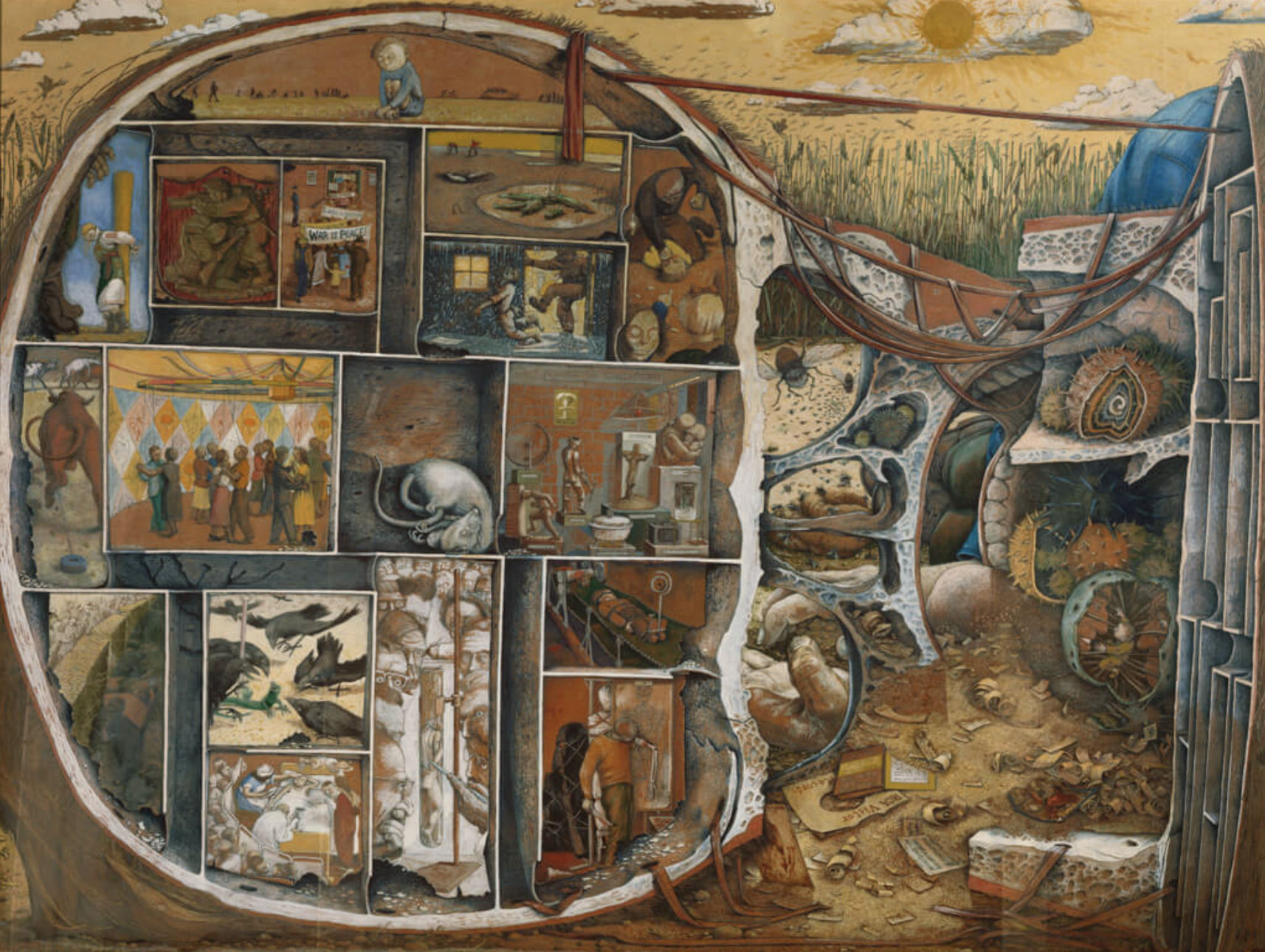
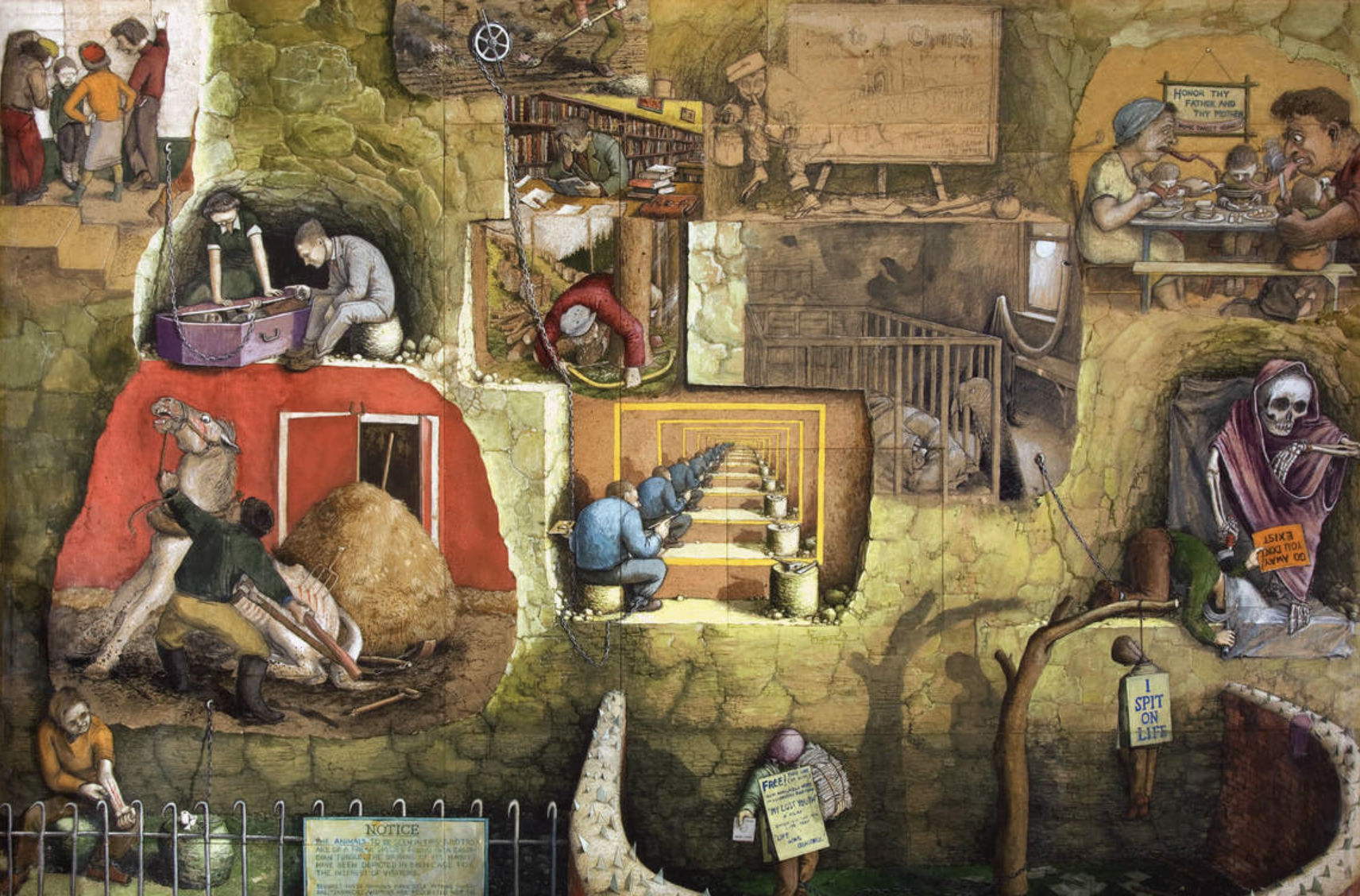
During his time in England in the early 1950s, Kurelek experienced severe mental health challenges and was hospitalized for depression and schizophrenia. While institutionalized, he produced some of his most powerful and psychologically charged works, including The Maze (1953), which visually maps his inner turmoil. This painting was later featured on the album cover of Fair Warning by rock band Van Halen.
In the hospital he met an occupational therapist who introduced him to Roman Catholicism. Kurelek then converted from atheism to Roman Catholicism, a change which immensely shaped his worldview and his art.
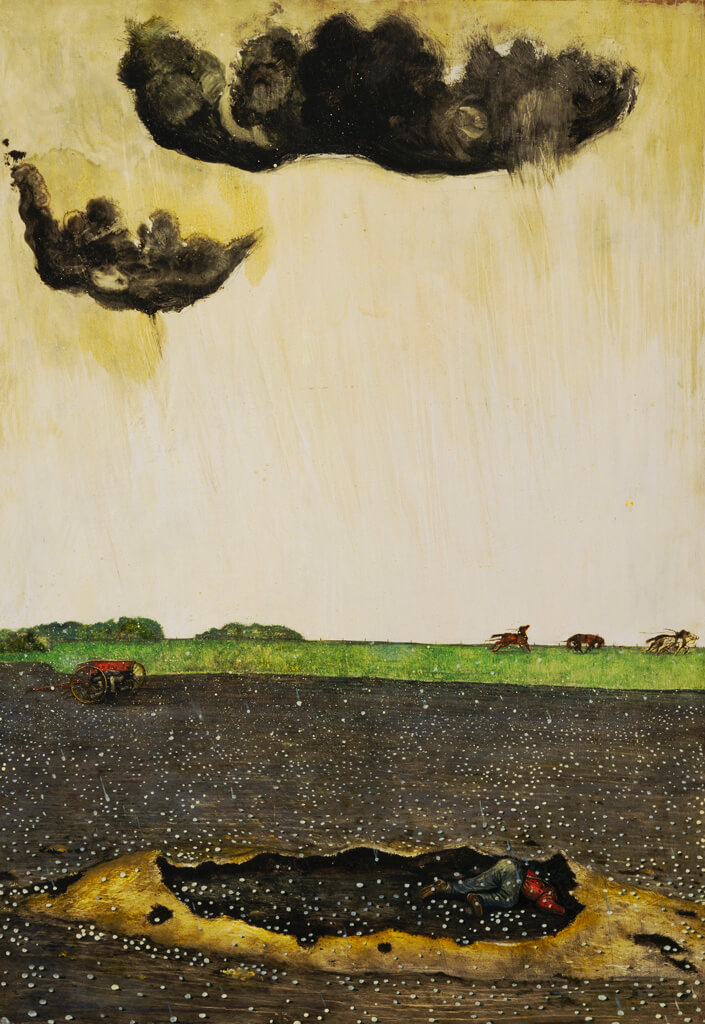
After returning to Canada in 1959, Kurelek quickly gained national recognition. His first exhibition at the Isaac’s Gallery in Toronto drew a significant crowd, where attendance for the show set a new record for the gallery. In the early 1960s, Alfred Barr, director of New York’s Museum of Modern Art, visited the Art Gallery of Ontario to select a Canadian painting for MoMA’s collection. At a time when abstract expressionism was dominant, Barr surprised them by choosing William Kurelek’s Hailstorm in Alberta.
William Kurelek's "Experiments in Didactic Art" exhibition occurred in 1963 at the Isaac's gallery. One painting, entitled Dinnertime on the Prairies, art critic Paul Duval stated, "I cannot recall any Canadian religious painting to equal it for sheer dramatic impact" and writer John Robert Colombo proclaimed the piece to be "an almost perfect combination of the prairies and the religious image". Kurelek occasionally included hidden crosses in his paintings, particularly in his paintings with religious or moral themes. These symbols were not present in all of his works but appeared selectively to honour his Roman Catholic faith. Art historians and catalogues note that the crosses were often seen in landscapes, interiors, and still lifes, serving as discreet spiritual markers without dominating the composition.
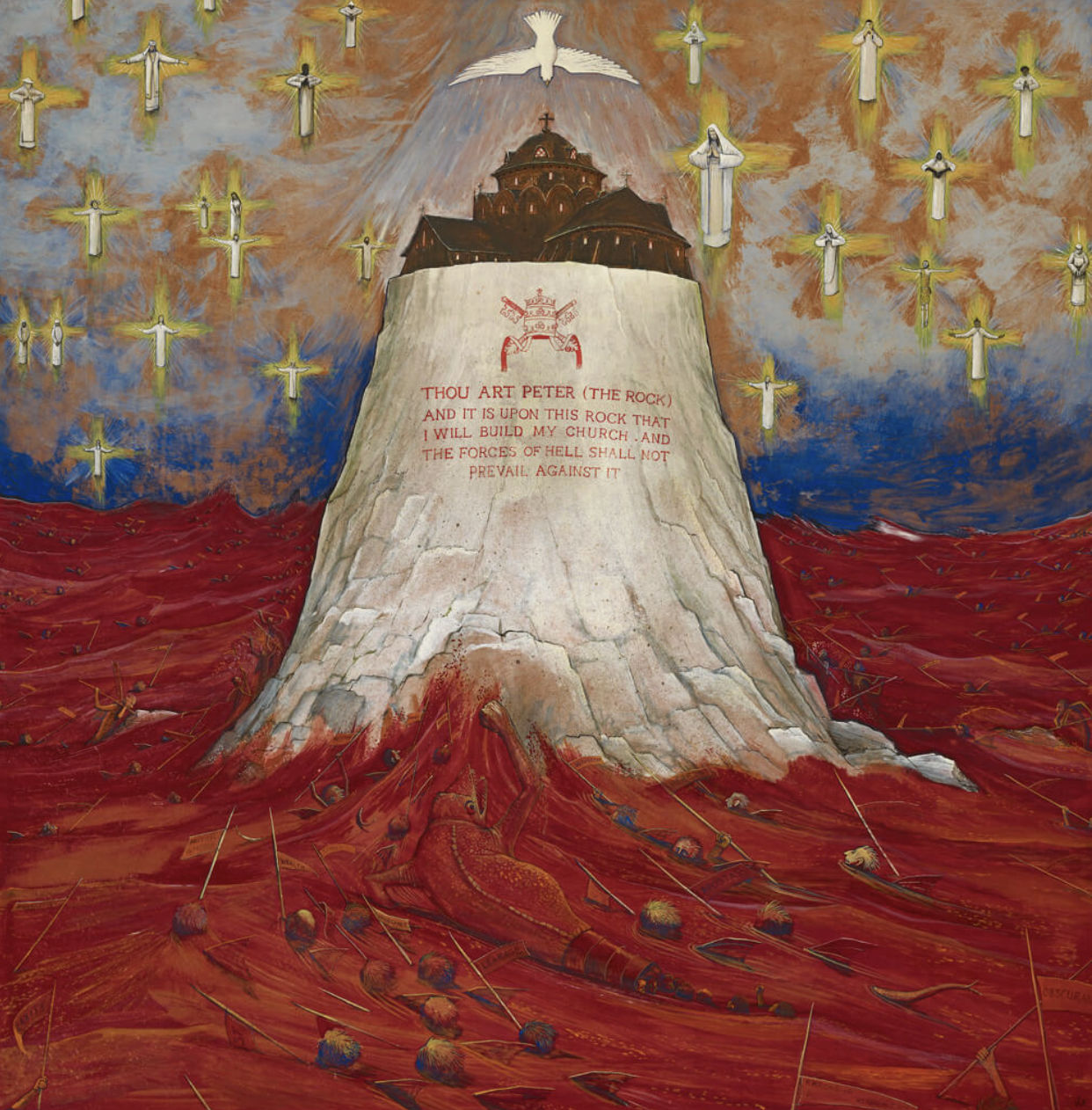
The Rock, 1962, mixed media on hardboard by William Kurelek
In 1970, Kurelek completed his massive St. Matthew’s Passion series, 160 paintings showcasing the Passion of Christ. The full series debuted as the first exhibition at Toronto’s new St. Volodymyr Institute in 1970. That evening, the Kolankiwskys, Ukrainian art dealers who were planning to open an art gallery in Niagara Falls, visited the Kureleks and expressed interest in purchasing the entire series. For Kurelek, who had never expected to sell these deeply personal works, this offer felt nothing short of miraculous. The entire cycle was purchased by them and placed on permanent display at the Niagara Falls Art Gallery and Museum in Ontario.
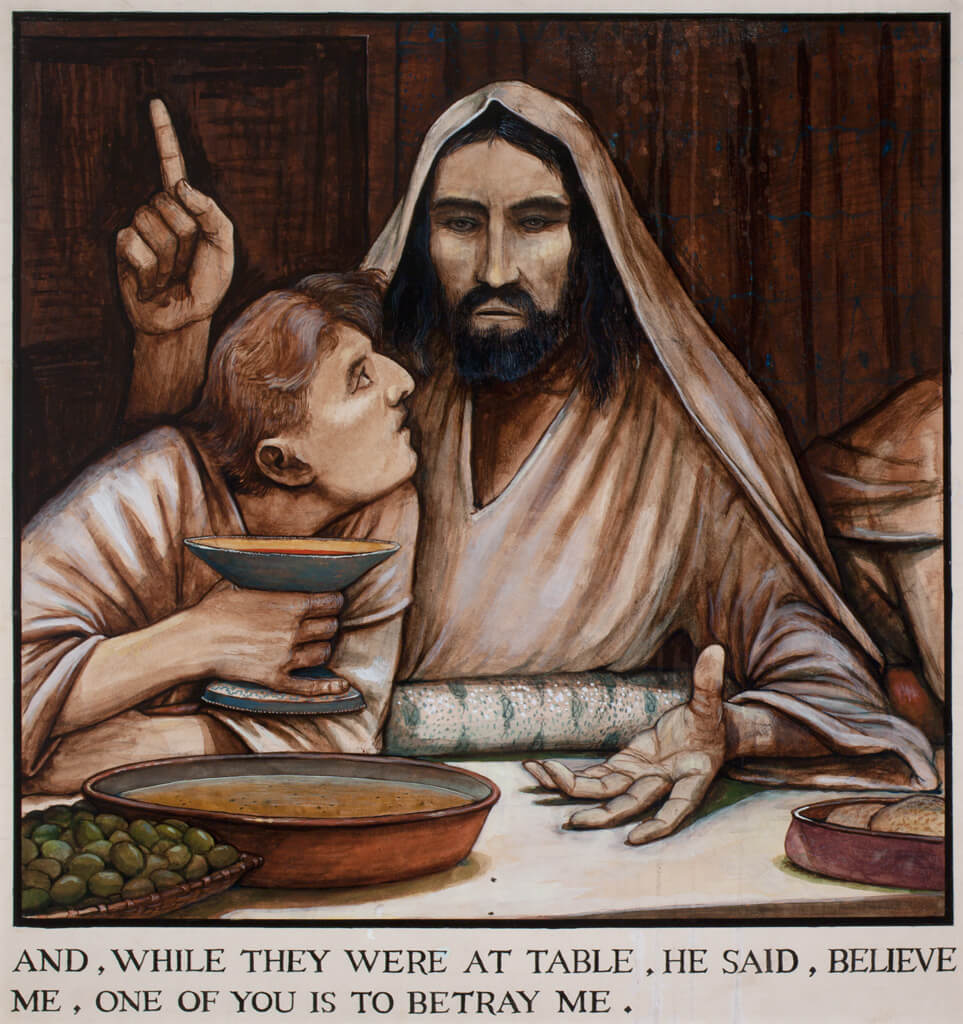
The Passion of Christ (And, While They Were at Table, He Said, Believe Me, One of You Is to Betray Me), 1960–63, gouache on paper by William Kurelek
Alongside painting, Kurelek became a celebrated author and illustrator. His children’s books, including A Prairie Boy’s Winter and A Prairie Boy’s Summer, are now considered classics of Canadian literature, praised for their portrayal of childhood on the prairies. Through both books and paintings, Kurelek sought to preserve cultural memory and give voice to diverse communities, producing series that explored Ukrainian, Jewish, Inuit, Irish, and Polish life in Canada.

Kurelek was appointed a Member of the Order of Canada and elected to the Royal Canadian Academy of Arts, reflecting his significant contribution to Canadian culture. He died of cancer in 1977 at the age of fifty, leaving behind a vast and personal body of work.
Today, William Kurelek is remembered as an artist who used painting and storytelling to confront suffering and celebrate faith and heritage. His work continues to resonate for its emotional honesty, technical precision, and unwavering commitment to meaning in art.
Consignment at Rookleys
At Rookleys Canadian Art, we are actively seeking works by William Kurelek for consignment, offering consignment rates far lower below what auction houses charge. If you have a painting by William Kurelek to consign, please contact us at info@rookleys.com to discuss these opportunities further.
Kurelek, William. A Prairie Boy’s Winter. Montréal: Tundra Books, 1973.
Kurelek, William. The Passion of Christ. Toronto: St. Volodymyr Institute, 1970.
Kurelek, William. “Biography.” Kurelek.ca. Accessed January 27, 2026. https://kurelek.ca/biography
Andrew Kear. “William Kurelek: Biography and Key Works.” Art Canada Institute. https://www.aci-iac.ca/art-books/william-kurelek/biography/
Schuurman, Peter. “Kurelek and the Passion of Christ.” Schuurman.ca, March 31, 2021. https://schuurman.ca/2021/03/31/kurelek-and-the-passion-of-christ/
Atlantic Books. “Jewish Life in Canada: William Kurelek.” https://atlanticbooks.ca/books/jewish-life-in-canada