
Born in Thurso, Scotland, Macdonald showed an early passion for drawing. After serving in the First World War, he entered the Edinburgh College of Art, where he received rigorous training in drawing, design, sculpture, and architecture. He graduated in 1922 with top distinctions, including a design scholarship and a carved-wood prize, alongside an art teaching certificate. That same year he married fellow artist Barbara Niece, who became his lifelong critic and supporter.
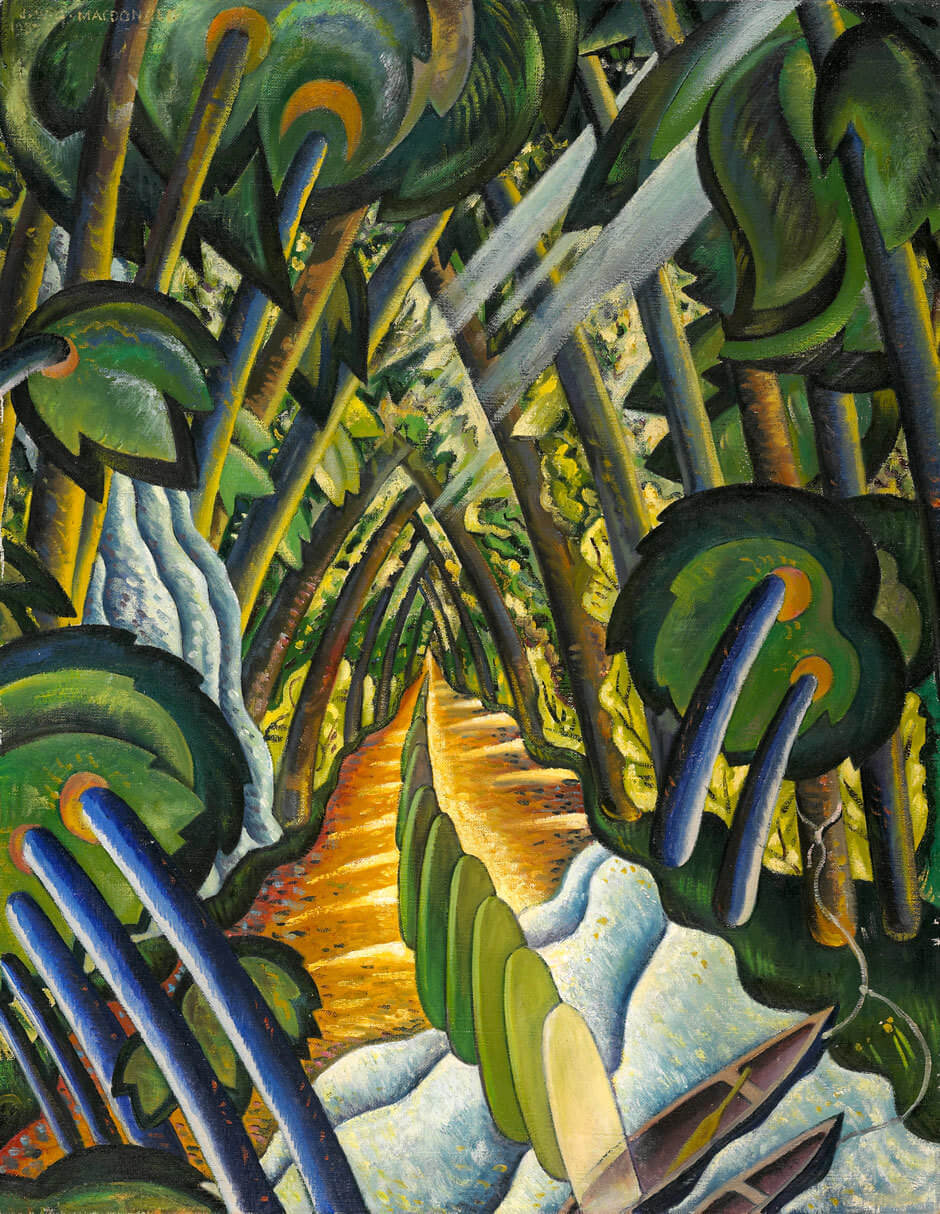
Pilgrimage, 1937, oil on canvas by Jock MacDonald
Macdonald began his career as a designer for the prestigious textile firm Morton Sundour Fabrics before turning to teaching. In 1926 he moved to British Columbia to join the newly established Vancouver School of Decorative and Applied Arts (today the Emily Carr University). The artistic energy of late-1920s Vancouver, combined with the influence of Frederick Varley and photographer John Vanderpant, shifted his focus from design to painting. Inspired by the landscape of the West Coast and drawn to spiritual ideas, he began exploring increasingly abstractive art.
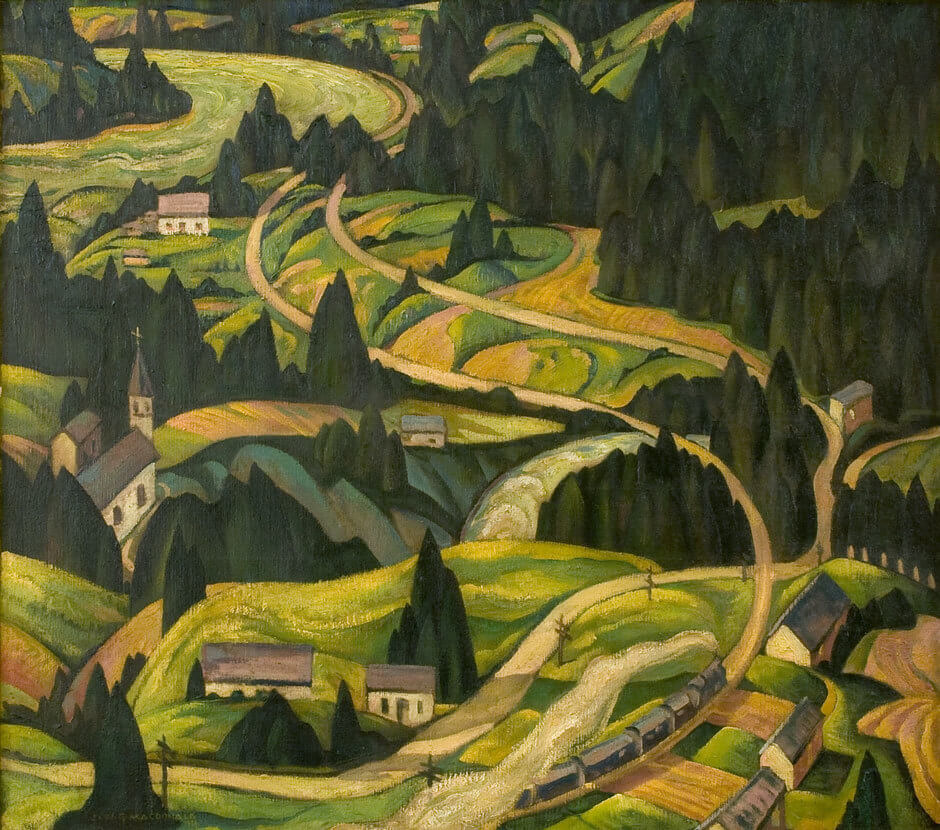
Yale Valley, B.C., c. 1932, oil on canvas by Jock MacDonald
In the early 1930s, Jock Macdonald and Frederick Varley co-founded the experimental British Columbia College of Arts, an ambitious but short-lived school formed by European modernism and Rudolf Steiner’s anthroposophy. Anthroposophy, Steiner’s spiritual philosophy, urged artists to explore intuition and metaphysical ideas as sources of creative expression. After the college closed, Macdonald sought renewal by moving with his family to Nootka Island in 1935. This remote environment, alongside a period of study and reflection, inspired him to produce a series of works called “modalities”. Between October and November of 1936 he produced this series of visionary semi-abstract works, “modalities”, which were paintings inspired by nature, spiritual inquiry, and the cosmos. He described modalities as “thought idioms in nature” or “expressions of thought in relation to nature. These works became the core of his identity for the next decade.
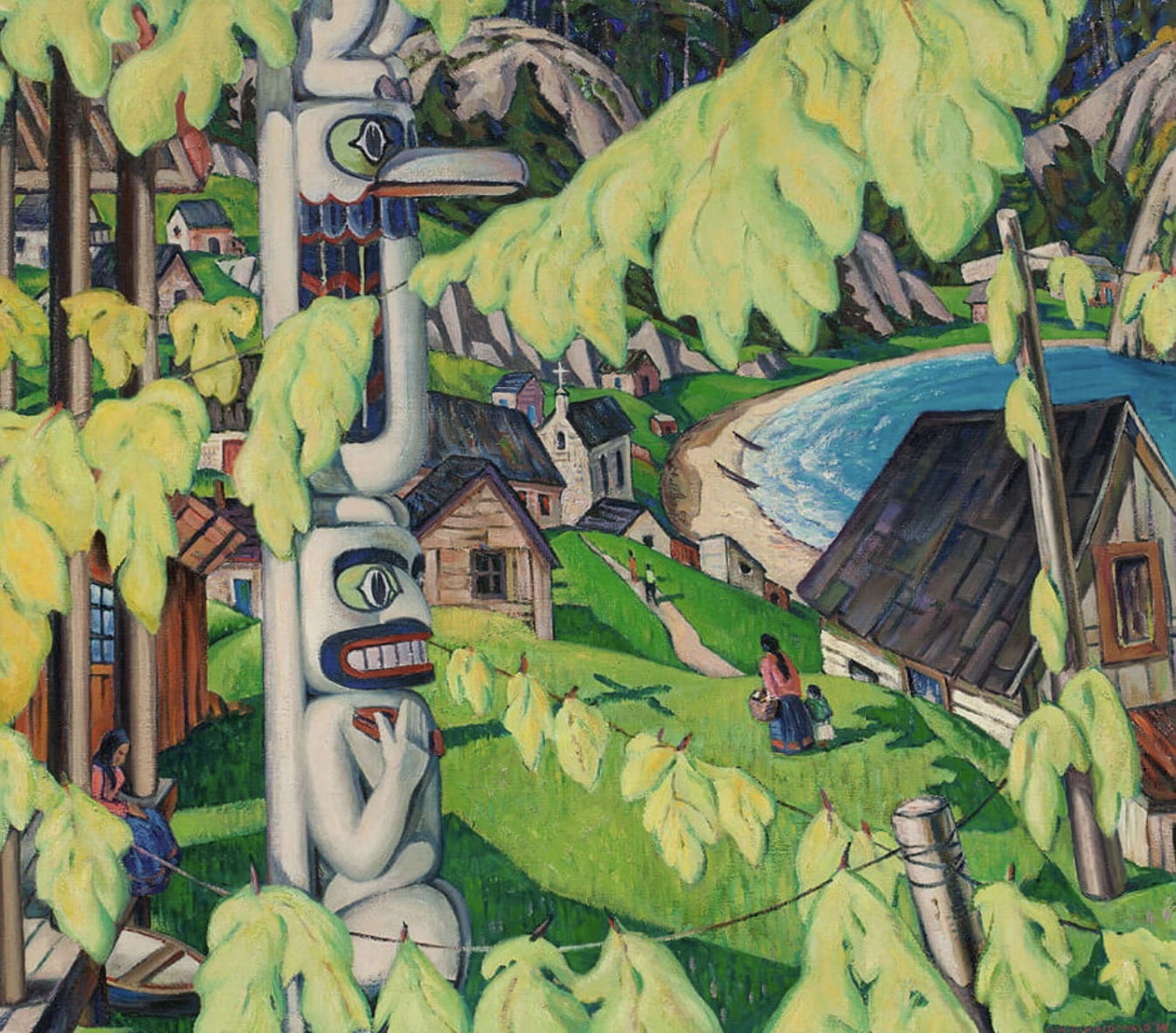
Drying Herring Roe, 1938, oil on canvas by Jock Macdonald
Back in Vancouver, Macdonald continued teaching while continuing with his landscape and abstract art. His work appeared in major exhibitions, including the National Gallery of Canada’s landmark Century of Canadian Art at the Tate Gallery in 1939. He contributed to the Gallery’s wartime silkscreen project, created murals, and continued to refine his semi-abstract painting language based on the West Coast.
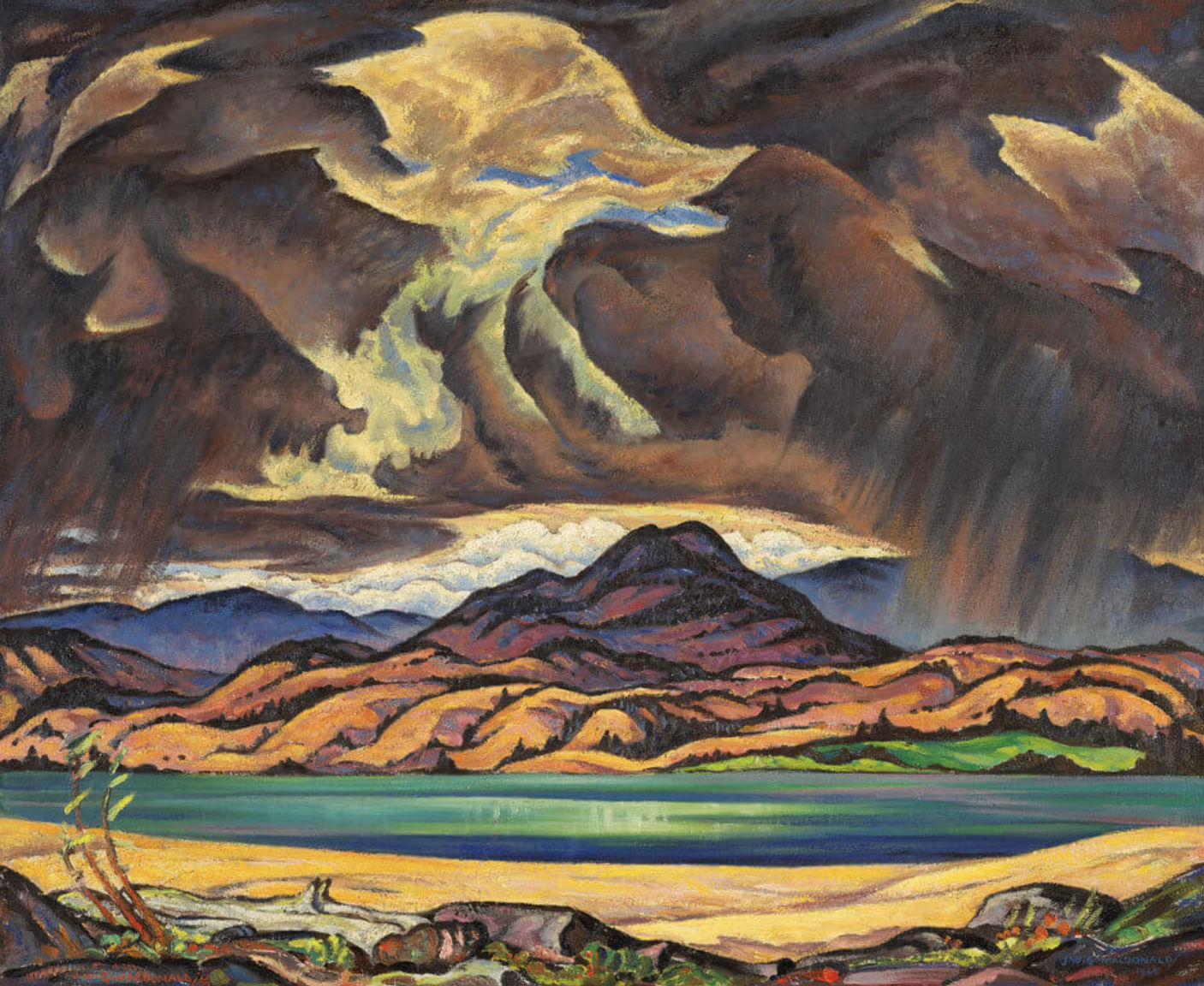
Thunder Clouds Over Okanagan Lake, 1944–45, oil on canvas by Jock Macdonald
After moving to Ontario in the late 1940s, Macdonald embraced full abstraction and became one of the central figures in Painters Eleven, Canada’s most important mid-century abstract group. His encouragement, enthusiasm, and belief in experimentation shaped the group’s spirit and helped propel Canadian abstract art into the international conversation.
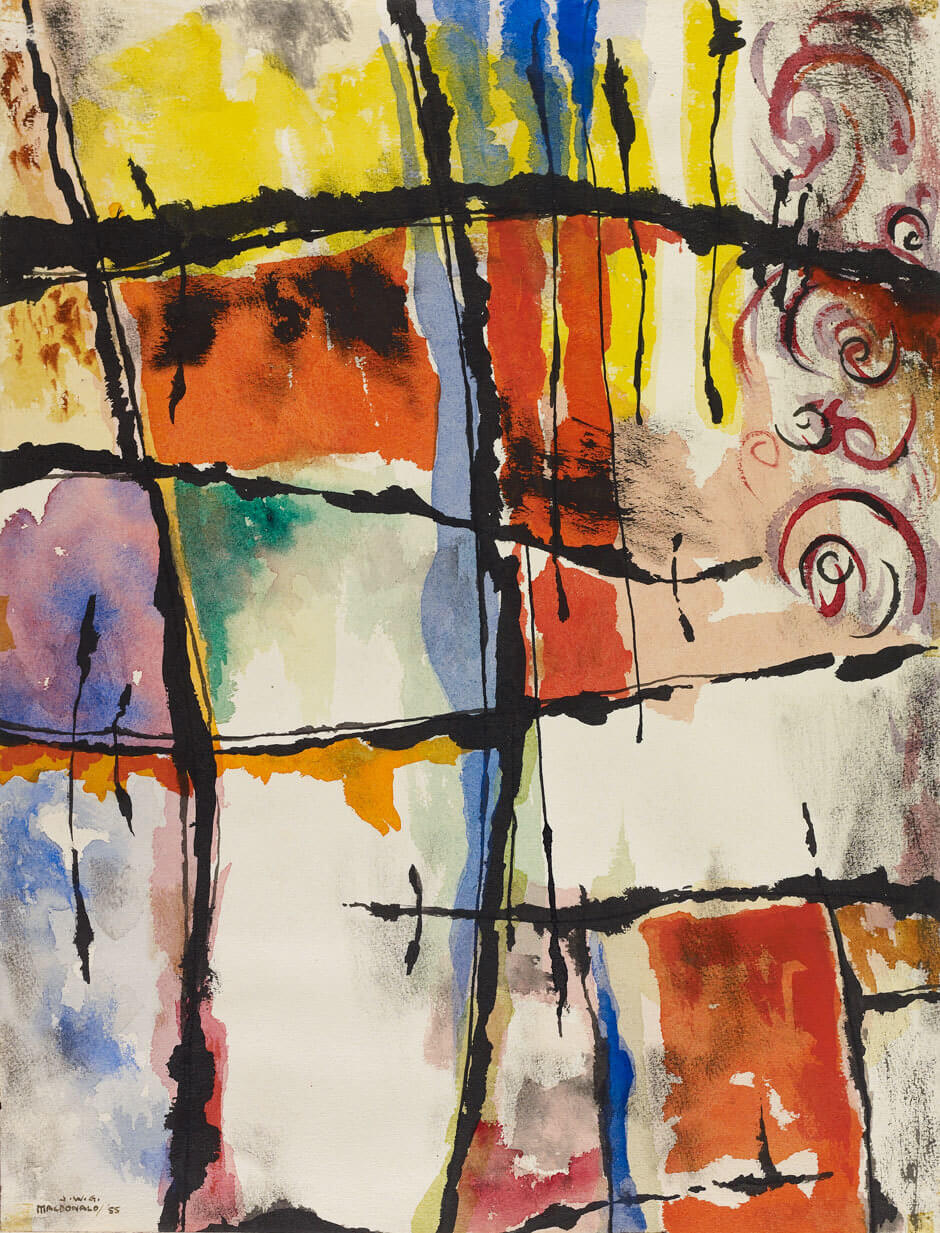
Consignment at Rookleys
At Rookleys Canadian Art, we are actively seeking works by Jock MacDonald for consignment, offering consignment rates far lower below what auction houses charge. If you have a painting by Jock MacDonald to consign, please contact us at info@rookleys.com to discuss these opportunities further.
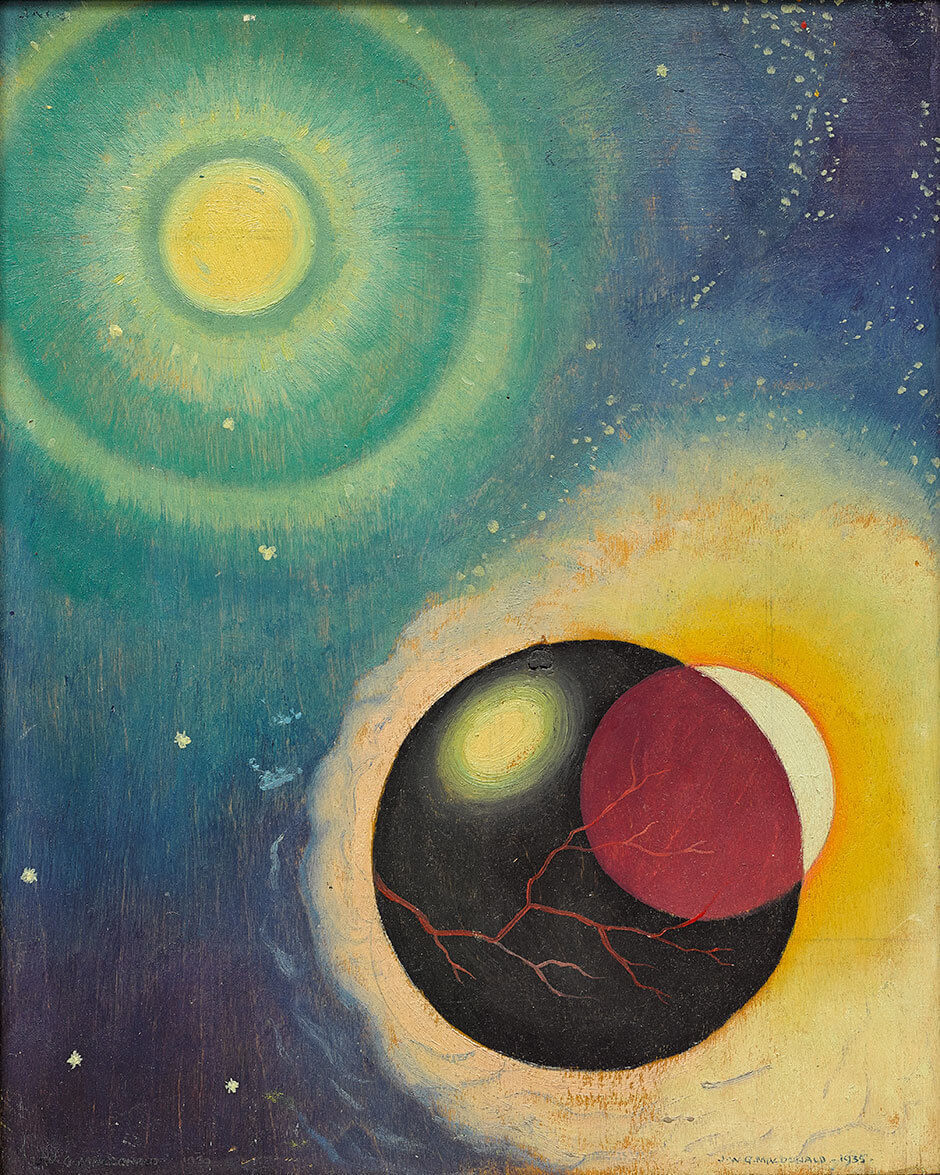
Departing Day, 1936, oil on wood panel by Jock MacDonald
Sources
Zemans, Joyce. Jock Macdonald: Life & Work. Ottawa: National Gallery of Canada / Art Canada Institute, 2015.
Jock Macdonald | National Gallery of Canada. National Gallery of Canada. https://www.gallery.ca/collection/artist/jock-macdonald
Shuebrook, Ron. “Jock Macdonald.” Border Crossings, no. 135 (August 2015). https://bordercrossingsmag.com/article/jock-macdonald