


"The art that I make and that I see others make confirms the miracle of being alive."
Joseph (Joe) Plaskett (July 12, 1918, New Westminster, BBC -September 21, 2014, Suffolk, England) stands among Canada’s most celebrated painters, renowned for his luminous still lifes, intimate Paris interiors, and deeply personal explorations of colour and light. Although he lived more than half a century in Europe, Plaskett remained passionately Canadian, maintaining lifelong ties to the country’s artistic community and exhibiting widely across Canada’s leading public galleries, including the National Gallery of Canada, the Vancouver Art Gallery, and major institutions from coast to coast.
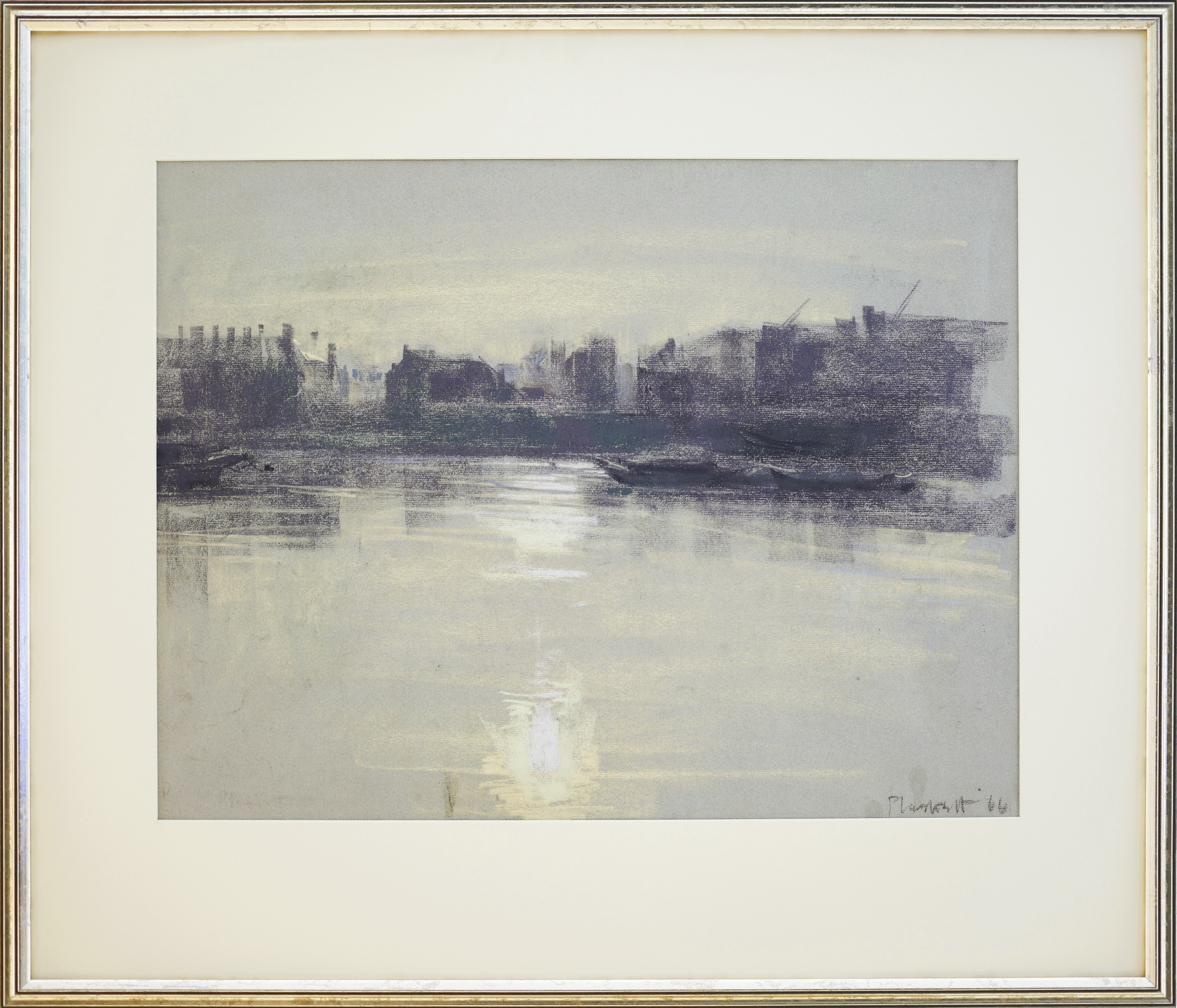
Joseph Plaskett; London Docks
Early Life, Education, and Canadian Foundations
Plaskett earned an Honours B.A. in History at the University of British Columbia before turning seriously to art. While teaching school in the 1940s, he undertook evening study at the Vancouver School of Art, encouraged by influential Canadian figures such as Lawren S. Harris, G.G. Sedgewick, Jock Macdonald, and Jack Shadbolt. In 1945 he painted with A.Y. Jackson at the Banff Summer School, and in 1946 he received the inaugural Emily Carr Scholarship—an award that became the pivotal turning point of his career. The scholarship took him to the California School of Fine Art, where he studied with Clyfford Still and David Park, and initiated a period of intensive training in San Francisco, New York, London, and Paris.
 Joseph Plaskett; Interior
Advanced Study and Artistic Development in Europe
Plaskett’s education reads like a map of modern art’s most influential centres. In New York he studied under Hans Hofmann in 1947–48, exploring abstraction and pictorial structure. Between 1949 and 1951 he lived in Paris, studying with Fernand Léger, a central figure in twentieth-century art. He continued his training at the Slade School of Fine Art in London (1951–52) under a British Arts Council bursary, and later worked with Stanley William Hayter at Atelier 17, refining his skills in etching and engraving. By the late 1950s Plaskett had renounced abstraction and embraced a personal, romanticised form of representational painting that combined Impressionist light with contemporary sensibility.
Paris and the Signature Interior Works
In 1957 Plaskett settled permanently in Paris, purchasing two floors of a fifteenth-century townhouse in the Marais. This historic home—decorated with Louis XVI furniture, curiosities from local flea markets, and filled with writers, artists, aristocrats, and visiting Canadians—became one of the great creative interiors of Canadian art history. Plaskett’s pastel and oil depictions of his Paris rooms, their still lifes, their windows, and the individuals who passed through them became his defining body of work. “Everything can happen within the space of a room,” he famously remarked, and his paintings demonstrate this belief: layered surfaces, glowing skins of pigment, saturated corals, mauves, lime greens, lemon bursts, and shifting light that reveal the emotional subtext beneath ordinary objects.
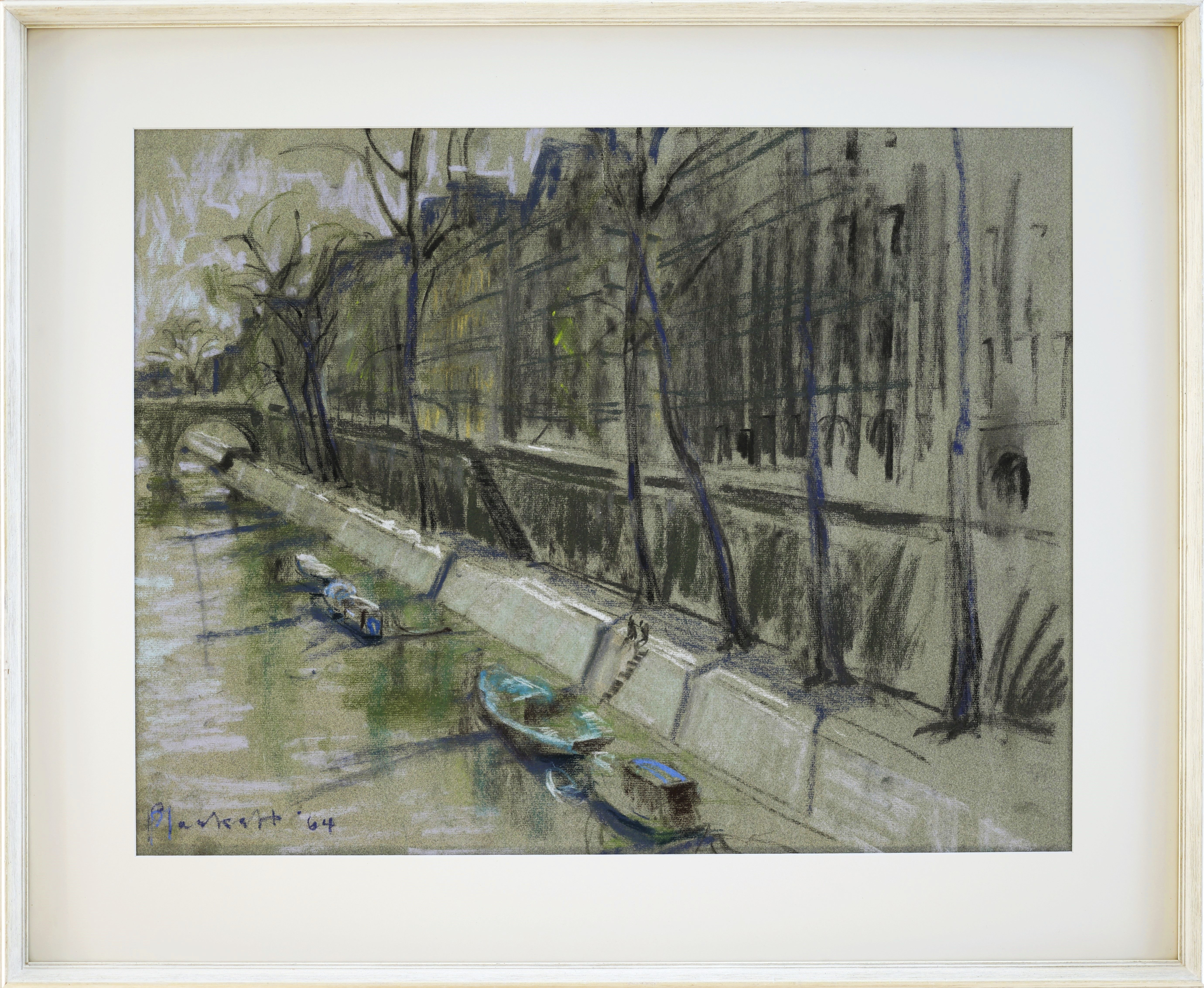
Joseph Plaskett; The Seine, and Quai de Bourbon, Paris
Themes, Style, and Artistic Philosophy
Drawing on a lineage stretching from Titian and Giorgione to the French Impressionists, Plaskett dissolved his observations of daily life into a distinctive visual language—part atmospheric Impressionism, part modern colour-field exploration, part diaristic reflection. Whether portraying a potted plant on the edge of a table, the geometry of a blade in a quiet room, or the carefully arranged interior of his apartment, Plaskett used everyday subjects to explore mortality, celebration, memory, and the essential clarity of living. His later works, especially from the 1990s and early 2000s, shifted towards isolated objects set against abstracted grounds, a development he described as letting the act of painting itself generate energy and meaning.
Exhibitions, Recognition, and Legacy
Plaskett’s first major exhibition took place at the Vancouver Art Gallery in 1951, opening a career that would include more than 65 solo and group exhibitions in Canada and Europe. His work is held in major public, private, and corporate collections, including the National Gallery of Canada, the Vancouver Art Gallery, and countless regional museums across the country. In 2001 he was appointed to the Order of Canada for excellence in visual art, and he was a longstanding member of both the Royal Canadian Academy of Arts and the Canadian Group of Painters.
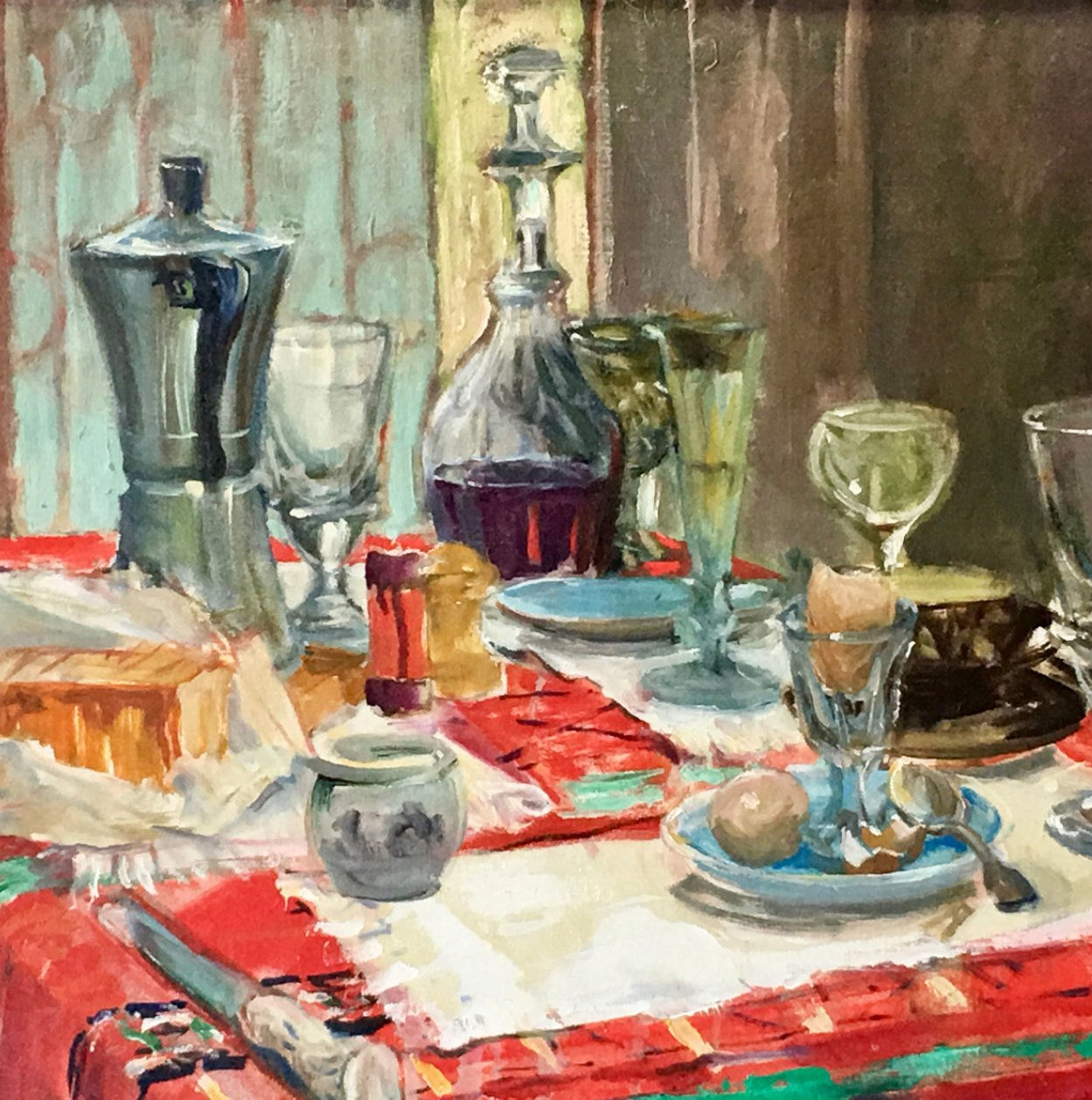 Joseph Plaskett; Still Life
Though he lived abroad for decades, Plaskett returned regularly to Canada, exhibiting frequently and mentoring younger artists. In 2004 he founded the Joseph Plaskett Foundation, modelled on the transformative support he received from Emily Carr. The Foundation’s annual Plaskett Award enables an emerging Canadian artist to study and work in Europe for a year—a living continuation of his belief that “the lesson of Europe and its past is always waiting for those ready to learn.”
Final Years and Enduring Influence
Plaskett moved from Paris to Suffolk, England in 2000, continuing to paint well into his nineties. He died in 2014 at the age of 96, leaving behind a body of work that spans more than seven decades. Today he is celebrated as one of Canada’s great colourists and interpreters of interior space—a painter whose still lifes, pastel interiors, and luminous domestic scenes remain deeply influential to collectors, museums, and contemporary artists alike.
His legacy lives on through his artworks, his writings—including the memoir A Speaking Likeness (1991)—and the ongoing work of the Plaskett Foundation, ensuring that new generations of Canadian artists can experience the richness of European artistic heritage just as he once did.